
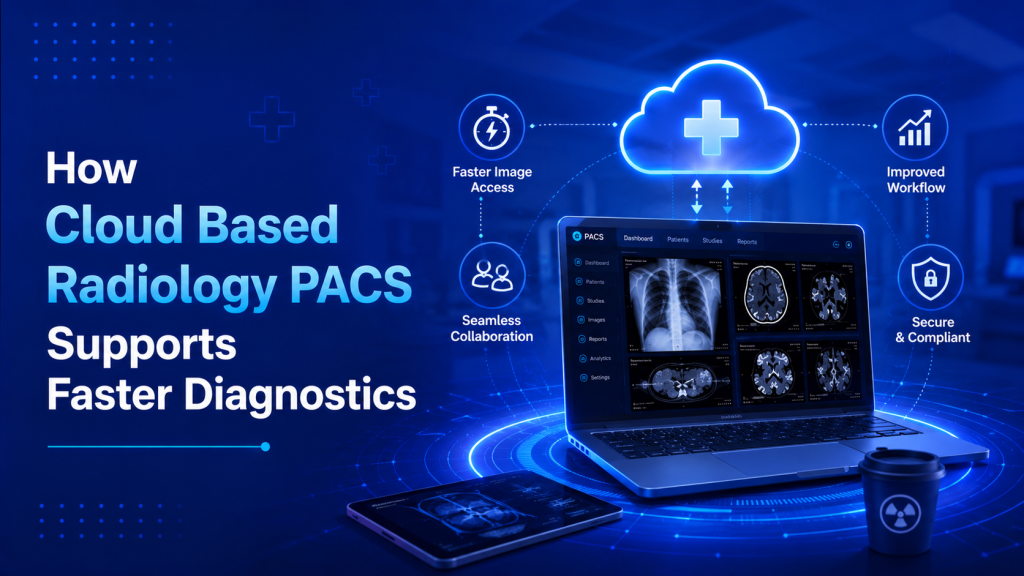
Speed is one of the most important factors in modern healthcare. Whether it is an emergency CT scan, an MRI for neurological symptoms, or a routine chest X-ray, doctors rely on fast imaging reports to make timely treatment decisions. Delays in radiology reporting can affect patient care, increase hospital waiting times, and slow clinical workflows.
As imaging volumes continue to grow, healthcare providers need systems that help radiologists work more efficiently without compromising accuracy. This is why many hospitals and diagnostic centers are moving toward cloud based radiology PACS solutions.
Traditional PACS systems often depend on local servers, fixed workstations, and complex infrastructure. While they helped digitize radiology, they can now create workflow limitations in fast-paced healthcare environments. Cloud-based PACS offers a more flexible and connected approach that supports faster diagnostics, easier collaboration, and better patient care.
This blog explains how cloud based radiology PACS improves diagnostic speed and helps modern radiology departments operate more efficiently.
Understanding Cloud Based Radiology PACS
PACS stands for Picture Archiving and Communication System. It is used to store, manage, retrieve, and share medical imaging studies such as:
- X-rays
- CT scans
- MRI studies
- Ultrasounds
- Mammography images
In cloud-based radiology PACS, imaging data is stored securely on cloud infrastructure instead of local hospital servers. Authorized users can access studies through secure internet-based platforms from different devices and locations.
This modern setup removes many of the limitations associated with traditional imaging systems.
Faster Image Access for Radiologists
One of the biggest reasons cloud PACS supports faster diagnostics is quick image availability.
Traditional systems may slow down when handling large imaging files, especially during busy hospital hours. Radiologists often lose time waiting for studies to load or transfer between departments.
Cloud based radiology PACS uses advanced image streaming technology that allows scans to open quickly, even for large CT or MRI studies. Images load progressively without requiring full downloads first.
This helps radiologists:
- Start reviewing cases immediately
- Reduce delays between studies
- Improve reporting speed during peak workloads
Faster image access directly improves turnaround time for patient reports.
Remote Reporting Without Workflow Interruptions
Modern healthcare increasingly depends on remote radiology services. Emergencies, night shifts, and multi-location healthcare networks require radiologists to access studies from different locations.
Cloud PACS makes remote reporting simple because radiologists can securely log in from anywhere with internet access.
Benefits include:
- Reporting from home or remote clinics
- Faster emergency coverage
- Access to specialist opinions
- Reduced dependence on hospital workstations
Radiologists no longer need complicated VPN setups or dedicated hardware to review urgent studies. This flexibility helps hospitals maintain continuous diagnostic services around the clock.
Improved Collaboration Between Specialists
Many complex cases require collaboration between radiologists, surgeons, physicians, and specialists. Traditional systems may slow this process because image sharing often depends on physical transfers or limited local access.
Cloud-based PACS improves collaboration by enabling:
- Instant image sharing
- Simultaneous access to studies
- Faster second opinions
- Multi-location consultation
For example, a rural clinic can upload emergency scans, and a specialist in another city can review them within minutes.
This faster communication supports quicker diagnosis and treatment decisions.
Centralized Workflow Management
Radiologists often work with multiple systems for images, patient records, and reports. Switching between platforms can slow workflows and increase the risk of mistakes.
Cloud based radiology PACS helps streamline operations by combining imaging and workflow tools into one centralized platform.
Radiologists can:
- Access patient studies
- Compare previous scans
- Review worklists
- Create reports
- Share findings
All from a single interface.
This organized workflow helps radiologists stay focused and complete reports faster.
Better Support for Emergency Cases
In emergency care, every minute matters. Delayed imaging reports can affect treatment for conditions such as:
- Stroke
- Trauma injuries
- Internal bleeding
- Pulmonary embolism
- Brain hemorrhage
Cloud PACS improves emergency diagnostics by allowing instant access to critical studies. Radiologists can prioritize urgent cases and deliver reports quickly without waiting for image transfers or workstation availability.
Hospitals benefit from faster decision-making and improved patient outcomes.
Scalability for High Imaging Volumes
Modern hospitals generate enormous imaging volumes every day. Traditional PACS systems often struggle as storage demands increase, leading to slower performance and expensive infrastructure upgrades.
Cloud PACS systems scale more easily because storage and computing resources expand based on demand.
This allows hospitals to:
- Handle more imaging studies efficiently
- Support multiple departments and locations
- Maintain fast performance during busy periods
Scalability ensures consistent workflow efficiency even as patient volumes grow.
Reduced IT and Maintenance Burden
On-premises PACS systems require continuous maintenance, including:
- Server management
- Software updates
- Hardware replacement
- Backup monitoring
Technical problems can interrupt radiology workflows and delay reporting.
Cloud-based solutions reduce this burden because system maintenance is handled by the provider. Hospitals spend less time managing infrastructure and more time focusing on patient care.
Secure and Reliable Image Access
Speed is important, but medical imaging systems must also remain secure. Cloud PACS providers use advanced security features such as:
- Encrypted image transfer
- Secure cloud storage
- Role-based user access
- Automatic backups
These measures protect patient data while ensuring studies remain easily accessible to authorized users.
Supporting the Future of Radiology
Healthcare technology is evolving rapidly with artificial intelligence, telemedicine, and advanced analytics becoming part of modern radiology workflows.
Cloud based radiology PACS is designed to support these future technologies more efficiently than traditional systems. Hospitals can integrate AI tools, expand teleradiology services, and improve workflow automation without major infrastructure changes.
This future-ready approach helps healthcare providers stay competitive while improving operational efficiency.
Conclusion
Fast and accurate diagnostics are essential in modern healthcare, and radiology departments need systems that can support growing imaging demands efficiently. Traditional PACS systems often create workflow delays due to hardware limitations, slow access, and restricted flexibility.
Cloud based radiology PACS helps hospitals improve diagnostic speed by providing faster image access, remote reporting capabilities, centralized workflows, and easier collaboration between specialists. It also reduces infrastructure costs while offering secure and scalable imaging management.
As healthcare continues to move toward digital and connected environments, cloud PACS is becoming a key technology for delivering faster diagnoses and better patient care. Hospitals that adopt cloud-based radiology systems are better prepared to handle modern imaging challenges while improving efficiency across their entire radiology department.
FAQs
A cloud based radiology PACS is a medical imaging platform that stores and manages diagnostic images on secure cloud servers rather than local hospital infrastructure. It allows radiologists to access studies remotely and improves workflow efficiency across healthcare facilities.
Cloud PACS enables faster image loading, instant study access, and seamless remote reporting. Radiologists can review imaging studies more quickly, reducing report turnaround times and helping clinicians make faster treatment decisions.
Yes, modern cloud PACS solutions use advanced security measures such as data encryption, role-based access controls, secure authentication, and automatic backups. These features help protect sensitive patient information while ensuring regulatory compliance.
Absolutely. Cloud-based PACS allows authorized users to securely access imaging studies from hospitals, clinics, home offices, or mobile devices. This flexibility supports teleradiology services and continuous patient care across multiple locations.
Cloud PACS makes it easy for radiologists, physicians, and specialists to share images and reports in real time. Faster collaboration improves communication, accelerates second opinions, and supports quicker diagnosis and treatment planning.