
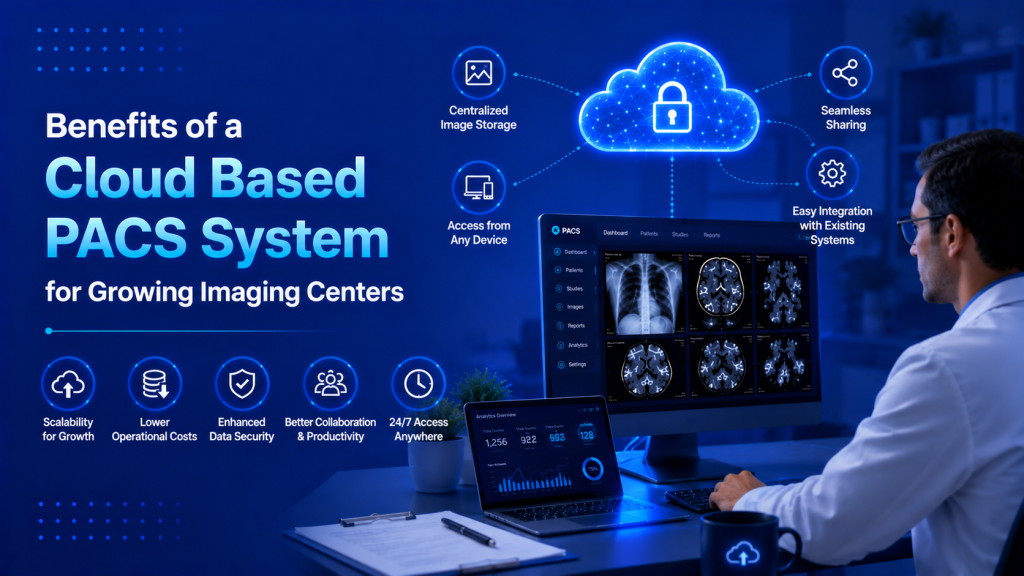
Medical imaging centers are expanding rapidly as healthcare providers continue to rely on advanced diagnostic technologies such as CT scans, MRI, ultrasound, digital X-rays, and mammography. Along with this growth comes a major challenge—managing increasing volumes of imaging data efficiently while maintaining fast reporting and high-quality patient care.
Traditional imaging systems often struggle to keep up with modern demands. Many growing imaging centers face issues such as limited storage, slow image access, expensive hardware upgrades, and difficulties supporting remote reporting. This is why more healthcare providers are moving toward a cloud based PACS system.
Cloud technology is transforming radiology workflows by making imaging management more flexible, scalable, and cost-effective. Instead of depending on heavy on-site infrastructure, imaging centers can access secure cloud platforms designed for faster workflows and easier collaboration.
This blog explains the key benefits of a cloud based PACS system for growing imaging centers and why it is becoming an essential part of modern radiology operations.
Understanding a Cloud Based PACS System
PACS stands for Picture Archiving and Communication System. It is used to store, retrieve, manage, and share medical imaging studies digitally.
A cloud based PACS system stores imaging data on secure cloud servers instead of local hospital hardware. Radiologists and clinicians can access studies through secure internet-based platforms from different devices and locations.
Cloud PACS supports multiple imaging modalities, including:
- X-rays
- CT scans
- MRI studies
- Ultrasounds
- PET scans
- Mammography images
This modern approach simplifies radiology workflows while reducing infrastructure dependence.
Easy Scalability for Growing Imaging Volumes
One of the biggest advantages of cloud PACS is scalability.
As imaging centers handle growing imaging volumes, traditional systems often require expensive storage expansion and server upgrades.
Cloud based PACS systems scale automatically according to demand. Imaging centers can:
- Add more storage without buying hardware
- Support higher patient volumes
- Expand to multiple branches
- Increase users and reporting capacity easily
This flexibility helps imaging centers grow without worrying about physical infrastructure limitations.
Lower Infrastructure and Maintenance Costs
Traditional PACS systems require substantial investment in:
- Servers
- Storage devices
- Backup systems
- Cooling and power infrastructure
- IT maintenance teams
For growing imaging centers, these ongoing costs can become difficult to manage.
Cloud PACS reduces these expenses because the cloud provider handles infrastructure management, software updates, and storage maintenance.
Benefits include:
- Lower upfront investment
- Reduced hardware dependency
- Fewer maintenance costs
- Predictable operational expenses
This allows imaging centers to allocate more resources toward patient care and service expansion.
Faster Access to Medical Images
Speed plays a critical role in radiology. Delayed access to imaging studies can slow diagnosis and affect patient satisfaction.
Cloud based PACS systems use advanced streaming technology that allows scans to load quickly from almost any location. Even large CT and MRI studies can be reviewed without major delays.
This helps radiologists:
- Report cases faster
- Reduce waiting time between studies
- Improve workflow efficiency
- Handle high imaging volumes more effectively
Faster image access improves both productivity and patient care.
Remote Reporting and Teleradiology Support
Modern imaging centers increasingly depend on remote reporting and teleradiology services. Radiologists may work across multiple locations or provide emergency reporting from home.
Cloud PACS makes remote access simple and secure. Radiologists can log in from anywhere using internet-connected devices without needing complex local setups.
This flexibility supports:
- After-hours reporting
- Multi-location imaging centers
- Specialist consultations
- Faster emergency diagnosis
Cloud systems help imaging centers maintain continuous radiology coverage while reducing operational limitations.
Improved Collaboration Between Healthcare Teams
Growing imaging centers often work closely with hospitals, specialists, and referring physicians. Fast communication is important for efficient patient management.
Cloud PACS simplifies collaboration by enabling:
- Instant image sharing
- Real-time case discussions
- Simultaneous access to studies
- Faster second opinions
Doctors can review scans from different locations without depending on physical transfers or outdated systems.
This improves coordination and speeds up clinical decision-making.
Better Data Security and Backup Protection
Medical imaging data is highly sensitive and must remain secure. Traditional systems may be vulnerable to hardware failures, accidental data loss, or local security risks.
Cloud based PACS systems typically include advanced security features such as:
- Encrypted data transfer
- Secure cloud storage
- Role-based user access
- Automatic backups
- Disaster recovery systems
These features help protect patient information while ensuring studies remain available when needed.
Simplified Workflow Management
Radiologists often work under pressure, especially in busy imaging centers handling large patient volumes. Managing multiple systems for viewing images, reporting, and accessing patient records can slow productivity.
Cloud PACS platforms streamline workflow by integrating:
- DICOM viewing
- Reporting tools
- Worklists
- Patient information access
Into one centralized interface.
This reduces unnecessary steps and helps radiologists stay focused during reporting.
Supporting Future Healthcare Technologies
Healthcare technology continues to evolve rapidly. Artificial intelligence, workflow automation, and telemedicine are becoming more common in radiology departments.
Cloud based PACS systems are designed to support these modern technologies more efficiently than traditional infrastructure. Imaging centers can integrate AI-assisted reporting tools, advanced analytics, and remote collaboration features without major hardware upgrades.
This future-ready approach helps imaging centers remain competitive in a fast-changing healthcare environment.
Better Patient Experience
Faster workflows and improved collaboration directly benefit patients. Cloud PACS helps imaging centers:
- Reduce report turnaround times
- Improve appointment efficiency
- Deliver faster diagnoses
- Support better communication between doctors and patients
A smoother radiology workflow creates a better overall healthcare experience for patients.
Conclusion
Growing imaging centers need radiology systems that are flexible, fast, secure, and scalable. Traditional PACS systems often create infrastructure challenges, maintenance costs, and workflow limitations that become harder to manage as imaging volumes increase.
A cloud based PACS system provides a smarter solution by offering faster image access, lower operational costs, remote reporting support, improved collaboration, and strong data security. It allows imaging centers to expand services without depending on expensive hardware upgrades or complex infrastructure management.
As healthcare continues moving toward digital and connected workflows, cloud PACS is becoming an essential technology for modern imaging centers. Facilities that adopt cloud-based imaging solutions are better prepared to improve efficiency, support radiologists, and deliver faster, more reliable patient care.
FAQs
A cloud based PACS system is a medical imaging platform that stores and manages radiology images on secure cloud servers instead of local hardware. It enables easy access to imaging studies, supports remote reporting, and improves workflow efficiency for healthcare providers.
Cloud PACS systems provide scalable storage and flexible infrastructure that can expand as imaging volumes increase. Growing imaging centers can add users, locations, and storage capacity without investing in expensive server upgrades.
Yes, cloud PACS reduces the need for costly servers, hardware maintenance, and IT infrastructure. With predictable subscription-based pricing and lower operational expenses, imaging centers can better manage long-term costs.
Absolutely. Cloud based PACS systems allow authorized radiologists to securely access imaging studies from any location using an internet connection. This supports teleradiology, after-hours reporting, and collaboration across multiple facilities.
Modern cloud PACS platforms use advanced security measures such as encrypted data transmission, secure storage, role-based access controls, and automated backups. These features help protect patient information and support regulatory compliance.