
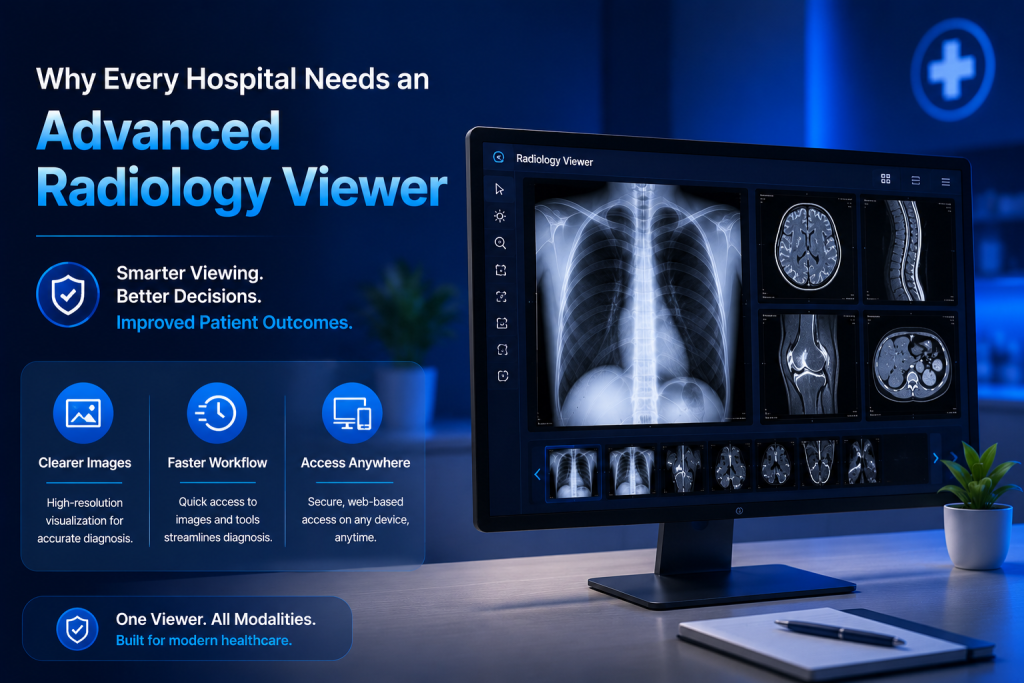
Medical imaging plays a critical role in modern healthcare. Doctors rely on imaging studies such as X-rays, CT scans, MRI, ultrasound, and PET scans to diagnose diseases, monitor treatments, and guide surgeries. As hospitals continue handling larger imaging volumes and more complex cases, the tools used to view and analyze medical images have become more important than ever.
Traditional image viewers may no longer meet the demands of modern radiology departments. Slow performance, limited functionality, and poor integration with hospital systems can delay diagnosis and reduce workflow efficiency. This is why hospitals are increasingly adopting advanced radiology viewers designed to support faster reporting, better collaboration, and more accurate image interpretation.
An advanced radiology viewer is more than just a tool for opening medical images. It is an essential part of modern diagnostic workflows that helps radiologists and clinicians work efficiently in high-pressure healthcare environments.
This blog explains why every hospital needs an advanced radiology viewer and how it improves patient care and radiology operations.
The Growing Importance of Medical Imaging
Healthcare providers now depend heavily on imaging for accurate diagnosis and treatment planning. Modern imaging machines generate extremely detailed studies with large datasets.
For example:
- CT scans may contain hundreds of image slices
- MRI studies often require multi-sequence analysis
- 3D imaging is becoming more common in diagnosis and surgery planning
Handling this data efficiently requires powerful viewing software that can process images quickly while maintaining diagnostic quality.
What Is an Advanced Radiology Viewer?
An advanced radiology viewer is specialized software designed to display, analyze, and manage medical imaging studies. It supports DICOM imaging standards and provides radiologists with tools for detailed image interpretation.
Modern radiology viewers typically include:
- Multi-modality image support
- High-speed image loading
- Zoom, pan, and windowing tools
- Multi-planar reconstruction (MPR)
- Measurement and annotation features
- Prior study comparison
- Integrated reporting support
These features help radiologists review cases faster and more accurately.
Faster Image Access Improves Workflow Efficiency
Radiologists often work under significant time pressure, especially in busy hospitals handling emergency and high-volume imaging cases.
Older or limited viewers may take time to load large CT or MRI studies, slowing the reporting process. An advanced radiology viewer uses optimized technology to display images quickly, reducing delays during diagnosis.
Faster image access helps hospitals:
- Improve report turnaround times
- Reduce workflow interruptions
- Increase radiologist productivity
- Support emergency care more efficiently
Saving even a few minutes per case can make a major difference in large radiology departments.
Better Diagnostic Accuracy
Accurate diagnosis depends not only on image quality but also on how effectively radiologists can analyze imaging studies.
Advanced radiology viewers provide tools that support detailed examination, including:
- High-resolution image rendering
- Multi-planar viewing
- 3D visualization
- Precise measurement tools
- Side-by-side comparison with previous studies
These features help radiologists identify abnormalities more confidently and improve reporting accuracy.
In complex cases such as oncology, neurology, or trauma imaging, advanced visualization tools are especially important.
Supporting Multi-Modality Imaging
Hospitals use many imaging modalities across different departments. A modern radiology viewer should support all major study types from a single interface.
This includes:
- X-rays
- CT scans
- MRI studies
- Ultrasound images
- Mammography
- PET and nuclear imaging
A unified viewer simplifies workflows because radiologists and clinicians do not need separate systems for different imaging modalities.
Improved Collaboration Between Doctors
Modern healthcare often requires collaboration between radiologists, physicians, surgeons, and specialists. Fast communication is essential for efficient patient management.
Advanced radiology viewers allow healthcare teams to:
- Share studies securely
- Review images remotely
- Discuss findings in real time
- Access imaging from multiple locations
This is especially useful for emergency cases, second opinions, and multi-specialty treatment planning.
Better collaboration helps doctors make faster and more informed decisions.
Essential for Teleradiology and Remote Reporting
Remote reporting has become increasingly important in healthcare. Hospitals frequently depend on off-site radiologists for after-hours reporting and specialist consultations.
An advanced radiology viewer supports teleradiology by providing secure web-based access to imaging studies from anywhere. Radiologists can review and report cases remotely without compromising image quality or workflow efficiency.
This flexibility allows hospitals to:
- Maintain 24/7 reporting coverage
- Reduce reporting delays
- Access specialist expertise quickly
- Improve patient care in remote areas
Modern healthcare requires viewing systems that support both on-site and remote radiology workflows.
Better Integration with Hospital Systems
Radiology departments rely on multiple systems, including PACS, RIS, HIS, and electronic medical records. Disconnected systems can slow workflows and create administrative challenges.
Advanced radiology viewers integrate smoothly with these platforms, allowing radiologists to access patient data, prior studies, and reports from one interface.
This integration improves:
- Workflow efficiency
- Data accuracy
- Reporting consistency
- Communication across departments
A connected workflow helps hospitals operate more effectively.
Enhanced Security and Data Protection
Medical imaging contains sensitive patient information that must remain secure. Modern radiology viewers include security features such as:
- Encrypted image transmission
- Role-based access control
- User authentication
- Audit tracking
These protections help hospitals maintain patient privacy while ensuring reliable access to imaging studies.
Preparing Hospitals for the Future
Healthcare technology is evolving rapidly with artificial intelligence, cloud imaging, and workflow automation becoming more common. Advanced radiology viewers are designed to support these innovations.
Hospitals using modern viewing systems can more easily integrate:
- AI-assisted diagnostics
- Cloud PACS platforms
- Advanced analytics tools
- Remote collaboration systems
This future-ready approach helps healthcare providers remain competitive while improving operational efficiency.
Conclusion
Medical imaging is central to modern diagnosis and patient care, and hospitals need tools that support fast, accurate, and efficient radiology workflows. Basic or outdated viewers often create delays, reduce productivity, and limit collaboration between healthcare teams.
An advanced radiology viewer improves workflow efficiency by providing faster image access, powerful visualization tools, seamless system integration, and remote accessibility. It helps radiologists work more efficiently while supporting better diagnostic accuracy and patient outcomes.
As imaging demands continue to grow, advanced radiology viewers are becoming essential for hospitals that want to deliver faster diagnoses, improve collaboration, and build future-ready radiology departments.
FAQs
An advanced radiology viewer is specialized software that enables healthcare professionals to view, analyze, and manage medical images from multiple imaging modalities. It offers tools such as 3D visualization, measurements, annotations, and image comparison to support accurate diagnosis.
Advanced viewers provide high-resolution image rendering, multi-planar reconstruction, and detailed measurement tools. These features help radiologists identify subtle abnormalities, compare previous studies, and make more confident diagnostic decisions.
Hospitals handle large volumes of imaging studies daily. Advanced radiology viewers improve workflow efficiency by providing faster image access, seamless system integration, and streamlined reporting, helping healthcare teams deliver timely patient care.
Yes, modern radiology viewers are designed for teleradiology and remote access. Radiologists can securely review and report imaging studies from different locations while maintaining image quality and workflow efficiency.
These viewers allow secure image sharing, real-time consultations, and remote access to studies. Physicians, surgeons, and specialists can review imaging findings together, improving communication and supporting better treatment planning.