
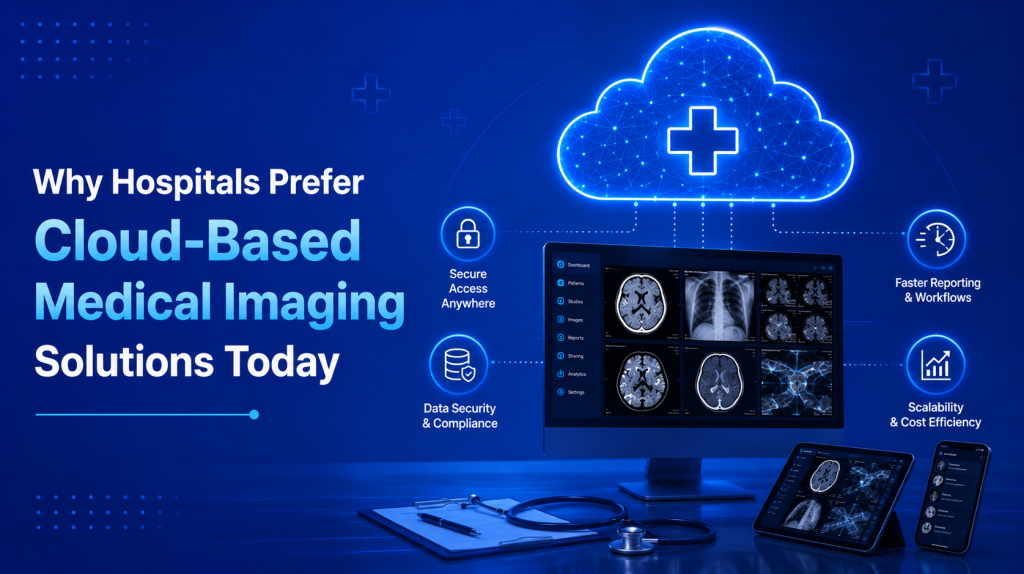
Medical imaging has become one of the most important parts of modern healthcare. Hospitals rely on imaging technologies such as X-rays, CT scans, MRI, ultrasound, and PET scans to diagnose diseases, monitor treatment progress, and support emergency care. As imaging volumes continue to grow, healthcare providers need faster, more flexible, and more secure ways to manage medical data.
Traditional imaging systems often struggle to meet these modern demands. Many hospitals still use on-premises storage systems that require expensive hardware, regular maintenance, and physical infrastructure. These systems can slow workflows, limit accessibility, and increase operational costs.
This is why hospitals are increasingly choosing cloud-based medical imaging solutions. Cloud technology is changing the way healthcare providers store, access, share, and manage medical images. It offers greater flexibility, faster collaboration, improved scalability, and better workflow efficiency.
This blog explains why cloud-based imaging solutions are becoming the preferred choice for hospitals today.
The Growing Challenges in Medical Imaging
Healthcare facilities now generate massive amounts of imaging data every day. Modern CT and MRI machines produce hundreds or even thousands of image slices per study. Managing this growing data volume with traditional systems is becoming more difficult.
Hospitals commonly face challenges such as:
- Limited storage capacity
- Slow image retrieval
- Expensive hardware upgrades
- Delayed image sharing
- Complex maintenance requirements
- Difficulty supporting remote reporting
These challenges not only affect radiologists but also impact patient care and hospital efficiency.
What Are Cloud-Based Medical Imaging Solutions?
Cloud-based medical imaging solutions store imaging data on secure cloud infrastructure instead of local servers. Radiologists and clinicians can access studies through internet-based platforms without relying on heavy on-site hardware.
These systems typically support:
- Medical image storage and archiving
- Remote image viewing
- Secure image sharing
- PACS and RIS integration
- Teleradiology workflows
By moving imaging operations to the cloud, hospitals gain more flexibility and efficiency in managing radiology services.
Faster Access to Medical Images
One major reason hospitals prefer cloud imaging solutions is speed.
Traditional systems may take time to retrieve large imaging studies, especially during peak usage hours. Delays in opening CT or MRI scans can slow reporting and treatment decisions.
Cloud-based platforms use advanced streaming technology to load images quickly from almost any location. Radiologists can review studies faster without depending on local servers or physical workstations.
This helps hospitals:
- Reduce reporting delays
- Improve emergency response times
- Support faster clinical decisions
- Increase radiologist productivity
Quick image access is especially important in critical care and emergency radiology.
Easy Remote Access for Radiologists
Healthcare no longer depends entirely on on-site reporting. Remote work and teleradiology have become essential in modern radiology departments.
Cloud-based medical imaging solutions allow radiologists to securely access studies from:
- Home offices
- Remote clinics
- Mobile devices
- Multiple hospital locations
There is no need for complicated installations or expensive infrastructure setups. This flexibility helps hospitals provide continuous radiology coverage, even during nights, weekends, or emergencies.
Remote accessibility also helps healthcare facilities connect with specialists more easily for second opinions or urgent consultations.
Lower Infrastructure and Maintenance Costs
Traditional imaging systems often require:
- Expensive servers
- Dedicated storage hardware
- IT maintenance teams
- Cooling and power systems
- Regular software upgrades
These ongoing costs can place financial pressure on hospitals.
Cloud-based solutions reduce infrastructure dependency because storage and maintenance are managed by the cloud provider. Hospitals no longer need to invest heavily in physical hardware or server expansion.
This makes cloud imaging more cost-effective, especially for:
- Small hospitals
- Growing imaging centers
- Multi-location healthcare networks
Predictable subscription-based pricing also helps hospitals manage budgets more efficiently.
Better Collaboration Between Healthcare Teams
Modern patient care often involves collaboration between multiple specialists. Radiologists, physicians, surgeons, and emergency teams all need access to imaging studies.
Cloud imaging solutions make collaboration easier by enabling:
- Real-time image sharing
- Simultaneous study access
- Faster consultation between specialists
- Secure remote collaboration
Doctors can review imaging studies together from different locations without delays caused by physical transfers or outdated systems.
This improves communication and supports faster patient management.
Improved Scalability for Growing Hospitals
As hospitals grow, imaging volumes also increase. Traditional systems may struggle with storage limitations and expensive hardware upgrades.
Cloud-based solutions scale much more easily. Hospitals can expand storage, add users, and support more imaging studies without purchasing additional infrastructure.
This flexibility is ideal for hospitals planning future growth or expanding radiology services across multiple locations.
Enhanced Data Security and Backup
Patient imaging data is highly sensitive and must remain protected. Cloud imaging providers invest heavily in advanced security technologies to ensure safe storage and transmission of medical images.
Most cloud-based systems include:
- Encrypted data transfer
- Secure cloud storage
- Automatic backups
- Disaster recovery protection
- Role-based access control
Unlike local servers, cloud systems reduce the risk of permanent data loss caused by hardware failures or natural disasters.
Hospitals benefit from stronger security while maintaining fast and reliable access to patient studies.
Supporting the Future of Digital Healthcare
Healthcare technology continues to evolve rapidly. Artificial intelligence, advanced analytics, and telemedicine are becoming more important in radiology.
Cloud-based medical imaging solutions are designed to support these future technologies. Hospitals can integrate AI tools, improve workflow automation, and expand remote healthcare services more easily through cloud platforms.
This future-ready approach helps healthcare providers remain competitive while improving operational efficiency.
Conclusion
Hospitals today need imaging systems that are fast, flexible, secure, and cost-effective. Traditional on-premises solutions often struggle to meet the growing demands of modern healthcare, especially as imaging volumes continue to increase.
Cloud-based medical imaging solutions provide a smarter alternative by offering faster image access, remote reporting capabilities, easier collaboration, lower infrastructure costs, and improved scalability. These systems also support stronger data security and future healthcare innovations.
As radiology departments continue to evolve, cloud technology is becoming essential for delivering efficient and patient-focused care. Hospitals that adopt cloud-based imaging solutions are better prepared to improve workflow efficiency, support radiologists, and provide faster diagnoses for better patient outcomes.
FAQs :
Cloud-based medical imaging solutions store and manage diagnostic images on secure cloud servers instead of local hospital infrastructure. They allow healthcare professionals to access studies remotely, improve collaboration, and simplify image management while maintaining high levels of security.
Hospitals are adopting cloud platforms because they offer faster image access, reduced infrastructure costs, easier maintenance, and better scalability. Cloud technology also supports remote reporting and helps healthcare facilities manage growing imaging volumes more efficiently.
Cloud imaging systems streamline workflows by enabling quick image retrieval, seamless sharing between departments, and secure remote access. Radiologists can review studies faster, reducing report turnaround times and supporting quicker clinical decision-making.
Yes, modern cloud imaging platforms use advanced security measures such as encryption, role-based access controls, automated backups, and disaster recovery systems. These features help protect sensitive patient information and support healthcare compliance requirements.
Absolutely. Cloud-based platforms are designed to support teleradiology by allowing radiologists to securely access imaging studies from any location. This enables continuous reporting, faster specialist consultations, and improved healthcare coverage across multiple facilities.