
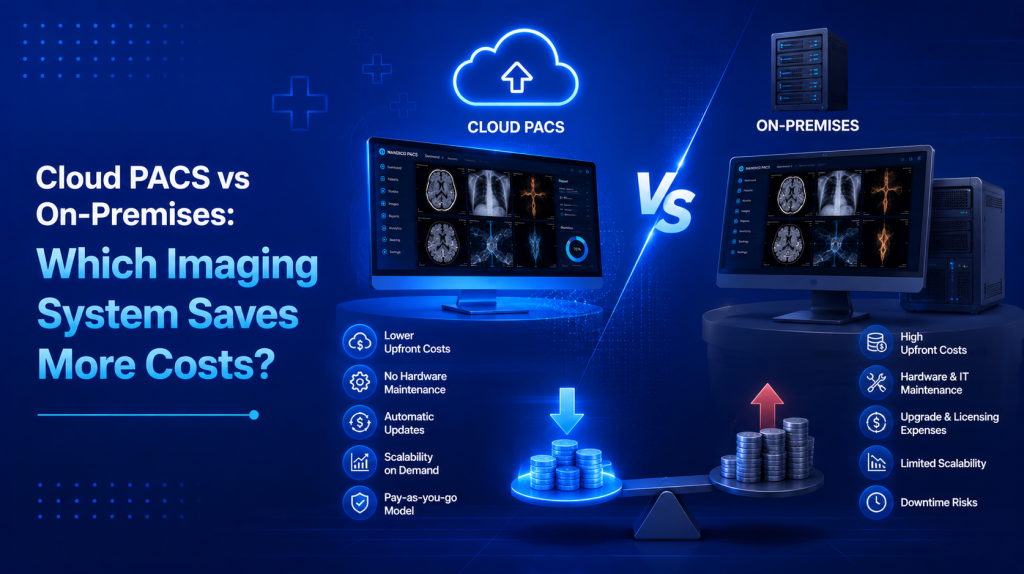
Medical imaging is a vital part of modern healthcare. Hospitals, diagnostic centers, and radiology clinics depend on PACS (Picture Archiving and Communication Systems) to store, manage, and share medical images such as X-rays, CT scans, MRIs, and ultrasounds.
As imaging volumes continue to grow, healthcare providers face an important decision: should they choose a traditional on-premises PACS or move to a cloud-based PACS system? While both systems serve the same purpose, their cost structure, maintenance needs, and long-term value are very different.
Today, many hospitals are shifting toward cloud PACS because they offer flexibility, scalability, and lower infrastructure costs. This blog explores the differences between cloud PACS and on-premises PACS and explains which option saves more costs in the long run.
Understanding On-Premises PACS
An on-premises PACS system stores imaging data on local servers installed within the hospital or imaging center. Healthcare providers manage the entire infrastructure internally, including hardware, storage, networking, and software updates.
Traditional PACS systems were widely adopted because they allowed hospitals to digitize radiology workflows and reduce dependence on physical film storage. However, maintaining these systems often requires significant investment.
Common Costs of On-Premises PACS
Hospitals using on-premises PACS typically face:
- High upfront server and hardware costs
- Dedicated IT teams for maintenance
- Software licensing and upgrade expenses
- Physical storage expansion over time
- Backup and disaster recovery systems
- Power, cooling, and infrastructure expenses
As imaging volumes increase, these costs continue to grow.
What Is Cloud PACS?
Cloud PACS stores medical imaging data securely on cloud infrastructure instead of local servers. Healthcare providers access studies through a secure internet-based platform without depending on heavy on-site hardware.
Cloud PACS systems are designed for flexibility and scalability. Instead of purchasing expensive infrastructure upfront, hospitals usually pay through subscription or usage-based models.
Lower Initial Investment
One of the biggest financial advantages of cloud PACS is reduced upfront cost.
With on-premises systems, hospitals must purchase:
- Servers
- Storage devices
- Backup hardware
- Networking equipment
- Dedicated workstations
This initial setup can be very expensive, especially for smaller clinics or growing hospitals.
Cloud PACS eliminates most of these infrastructure costs because the provider manages storage and computing resources remotely. Hospitals can start using the system without investing heavily in hardware.
For many healthcare facilities, this makes cloud PACS more affordable from the beginning.
Reduced IT Maintenance Costs
On-premises PACS require continuous maintenance. Hospitals need IT staff to monitor servers, install updates, troubleshoot problems, and manage backups. Hardware failures can also result in repair or replacement costs.
Modern secure cloud-based PACS solutions significantly reduce this burden because maintenance is handled by the service provider.
ovider.
This includes:
- System updates
- Security patches
- Storage management
- Backup and disaster recovery
- Performance optimization
As a result, hospitals spend less on IT infrastructure and support teams.
Better Scalability Without Extra Hardware
Medical imaging data grows rapidly every year. CT and MRI studies generate large files that require expanding storage capacity.
With on-premises PACS, increasing storage usually means buying additional hardware and upgrading servers. These upgrades are expensive and time-consuming.
Cloud PACS offers flexible scalability. Hospitals can increase storage or add users without purchasing physical equipment. The system expands based on demand.
This is especially valuable for:
- Multi-specialty hospitals
- Growing imaging centers
- Teleradiology providers
- Multi-location healthcare networks
Cloud scalability helps healthcare providers avoid major future infrastructure investments.
Lower Downtime and Disaster Recovery Costs
System downtime in radiology can delay patient care and disrupt hospital operations.
On-premises systems are vulnerable to:
- Hardware failure
- Power outages
- Server crashes
- Natural disasters
- Data corruption
Recovering lost data or rebuilding systems can be extremely costly.
Cloud PACS providers usually include automatic backups and disaster recovery solutions. Data is stored securely across multiple locations, reducing the risk of permanent data loss.
This improves reliability while lowering the financial impact of downtime.
Remote Access Saves Operational Cost
Modern healthcare increasingly depends on remote reporting and collaboration.
On-premises PACS often require VPN access, specialized workstations, or complex network configurations for remote use. These setups increase technical costs and administrative complexity.
Cloud PACS allows radiologists to securely access imaging studies from anywhere using internet-connected devices.
Benefits include:
- Reduced dependence on physical workstations
- Support for remote radiologists through teleradiology services
- Faster emergency reporting
- Easier collaboration between hospitals
This flexibility helps hospitals optimize staffing and reduce operational expenses.
Long-Term Financial Benefits
While some hospitals believe on-premises systems offer more control, long-term expenses often become difficult to manage. Hardware replacement, software upgrades, storage expansion, and maintenance costs continue to increase over time.
Cloud PACS follows a more predictable cost model. Healthcare providers can plan expenses more efficiently without worrying about sudden infrastructure failures or expensive upgrades.
Over several years, many hospitals find cloud PACS more cost-effective because it reduces both capital expenditure and operational costs.
Which System Is Better for Modern Healthcare?
On-premises PACS may still work for large hospitals with dedicated IT infrastructure and existing server investments. However, many healthcare organizations now prefer cloud PACS because of its flexibility, lower maintenance costs, and scalability.
Cloud PACS is particularly beneficial for:
- Growing healthcare centers
- Teleradiology services
- Multi-location hospitals
- Clinics seeking lower upfront costs
- Facilities wanting remote accessibility
As healthcare becomes more digital and connected, cloud-based imaging systems are becoming the preferred choice.
Conclusion
Choosing between cloud PACS and on-premises PACS is not just a technology decision—it is a financial one. Traditional on-premises systems often involve high upfront investment, ongoing maintenance costs, hardware upgrades, and infrastructure management.
Cloud PACS offers a more flexible and cost-effective alternative by reducing hardware dependence, lowering IT expenses, improving scalability, and supporting remote access. It allows hospitals and imaging centers to focus more on patient care instead of managing complex infrastructure.
For modern healthcare providers looking to improve efficiency while controlling long-term costs, cloud PACS is increasingly becoming the smarter and more sustainable solution.
FAQs :
Cloud PACS stores medical images on secure cloud infrastructure, while On-Premises PACS relies on local hospital servers. Cloud solutions reduce hardware dependency and provide easier remote access, whereas on-premises systems require dedicated infrastructure and maintenance.
In many cases, Cloud PACS offers lower long-term costs because it eliminates large upfront hardware investments and reduces IT maintenance expenses. Hospitals can scale storage and resources without purchasing additional physical infrastructure.
Cloud PACS allows hospitals to expand storage capacity and support growing imaging volumes instantly. Unlike on-premises systems, there is no need for server upgrades or costly hardware installations when demand increases.
Cloud PACS is generally better for remote reporting because radiologists can securely access imaging studies from any location with internet connectivity. This supports teleradiology, after-hours reporting, and collaboration across multiple healthcare facilities.
Yes, modern Cloud PACS platforms use advanced security measures such as encryption, access controls, automated backups, and disaster recovery systems. These features help protect patient information while meeting healthcare compliance requirements.