
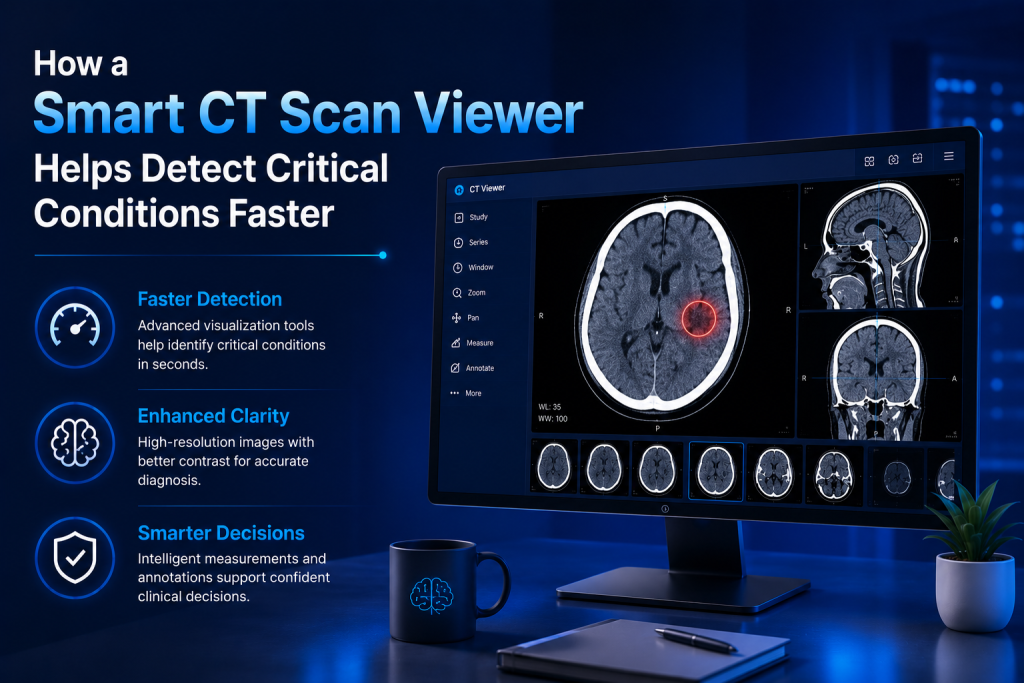
CT scans have become one of the most important diagnostic tools in modern healthcare. From emergency trauma cases to stroke detection and cancer diagnosis, CT imaging helps doctors identify serious medical conditions quickly and accurately. However, the value of a CT scan does not depend only on the imaging machine itself. The software used to view and analyze those images also plays a major role in diagnosis.
As hospitals handle increasing imaging volumes and more complex cases, traditional viewing systems often struggle to keep up. Slow image loading, limited visualization tools, and fragmented workflows can delay diagnosis and affect patient care. This is why healthcare providers are increasingly adopting smart CT scan viewers designed to improve speed, accuracy, and workflow efficiency.
A smart CT scan viewer helps radiologists and clinicians review imaging studies faster, detect abnormalities more effectively, and make quicker treatment decisions during critical situations.
This blog explains how advanced CT scan viewers support faster detection of critical conditions and improve modern radiology workflows.
The Growing Importance of CT Imaging
CT scans are widely used because they provide highly detailed cross-sectional images of the body. Doctors depend on CT imaging to diagnose conditions such as:
- Stroke and brain hemorrhage
- Internal bleeding
- Fractures and trauma injuries
- Lung infections and pulmonary embolism
- Tumors and cancer spread
- Abdominal and spinal emergencies
In emergency care, every minute matters. Fast access to imaging studies and quick interpretation can significantly improve patient outcomes.
What Is a Smart CT Scan Viewer?
A smart CT scan viewer is advanced medical imaging software designed to display and analyze CT studies efficiently. Unlike basic viewers, smart viewers offer faster performance, improved visualization tools, and workflow optimization features.
Modern CT viewers typically include:
- High-speed image loading
- Multi-planar reconstruction (MPR)
- 3D image visualization
- Measurement and annotation tools
- Adjustable contrast and windowing
- Prior study comparison
- Cloud and remote access support
These capabilities help radiologists evaluate scans more accurately and efficiently.
Faster Image Loading Saves Critical Time
One of the biggest advantages of a smart CT scan viewer is speed.
CT studies often contain hundreds or even thousands of image slices. Handle high imaging volumes more effectively. Older systems may take time to load these large datasets, especially during peak hospital hours. Delays in accessing studies can slow emergency diagnosis and treatment.
Smart CT viewers use optimized image streaming and processing technology to open studies quickly. Radiologists can begin reviewing scans almost immediately without waiting for full downloads.
This helps healthcare teams:
- Reduce emergency reporting delays
- Improve workflow efficiency
- Start treatment faster
- Handle high imaging volumes more effectively
In critical care situations, faster image access can directly impact patient survival.
Better Visualization Improves Detection Accuracy
Detecting small abnormalities in CT scans requires high-quality visualization tools. Smart CT scan viewers provide advanced image manipulation features that help radiologists analyze studies in greater detail.
These tools include:
Multi-Planar Reconstruction (MPR)
Radiologists can view anatomy from different angles, improving visibility of fractures, tumors, or vascular abnormalities.
3D Imaging
Three-dimensional visualization helps doctors better understand complex injuries and anatomical structures.
Adjustable Windowing and Contrast
Different tissues become easier to evaluate by adjusting image brightness and contrast levels.
Zoom and Precision Tools
Radiologists can closely inspect small lesions, bleeding areas, or subtle abnormalities.
These advanced viewing features improve diagnostic confidence and reduce the risk of missed findings.
Supporting Faster Stroke Diagnosis
Stroke management depends heavily on speed. Doctors often have only a short time window to begin treatment and reduce brain damage.
Smart CT scan viewers help radiologists quickly identify:
- Brain hemorrhage
- Blocked blood vessels
- Signs of ischemic stroke
- Brain swelling and trauma
Fast image processing and advanced visualization tools support quicker decision-making in emergency stroke care.
Improving Trauma and Emergency Imaging
Emergency departments handle large numbers of trauma patients every day. CT imaging is commonly used to evaluate:
- Internal bleeding
- Organ injuries
- Fractures
- Head trauma
- Chest and abdominal injuries
Smart CT viewers allow radiologists to review trauma studies rapidly while maintaining image quality and accuracy. Faster diagnosis helps emergency teams begin treatment sooner and prioritize critical patients more effectively.
Remote Access for Emergency Reporting
Hospitals increasingly depend on remote radiologists and teleradiology services for emergency reporting.
Smart CT scan viewers often support secure cloud-based access, allowing radiologists to review studies from:
- Home workstations
- Remote hospitals
- Mobile devices
- Multi-location healthcare networks
This flexibility ensures hospitals can provide continuous reporting coverage even during nights, weekends, or staffing shortages.
Better Workflow Integration
Radiologists frequently work with PACS, RIS, reporting systems, and electronic medical records. Switching between disconnected platforms can slow workflows and create inefficiencies.
Smart CT viewers integrate smoothly with modern hospital systems, allowing radiologists to:
- Access patient data quickly
- Compare previous scans
- Create reports faster
- Manage worklists efficiently
This connected workflow improves productivity and reduces reporting delays.
Supporting AI and Advanced Diagnostics
Artificial intelligence is becoming more common in radiology, especially in CT imaging. Smart viewers can integrate with AI tools that assist in detecting:
- Stroke abnormalities
- Lung nodules
- Fractures
- Brain hemorrhage
- Pulmonary embolism
AI does not replace radiologists but helps prioritize urgent cases and improve workflow efficiency.
Smart CT viewers provide the infrastructure needed for future-ready radiology workflows.
Enhancing Patient Care
Faster detection of critical conditions directly improves patient care. Smart CT scan viewers help hospitals:
- Deliver quicker diagnoses
- Reduce emergency department waiting times
- Improve treatment planning
- Increase reporting accuracy
- Support better communication between healthcare teams
Efficient imaging workflows lead to faster clinical decisions and improved patient outcomes.
Conclusion
CT imaging plays a vital role in diagnosing critical medical conditions, but fast and accurate interpretation depends heavily on the viewing technology used by radiologists. Traditional systems often create delays and workflow limitations that can affect emergency care and diagnostic efficiency.
A smart CT scan viewer improves radiology workflows by providing faster image access, advanced visualization tools, remote accessibility, and better system integration. These features help healthcare providers detect critical conditions more quickly while maintaining high diagnostic accuracy.
As imaging demands continue to grow, smart CT viewers are becoming essential tools for modern hospitals and imaging centers. By supporting faster diagnosis and more efficient workflows, they help healthcare teams deliver timely and effective patient care when every second matters.
FAQs
A smart CT scan viewer is advanced medical imaging software that helps radiologists view, analyze, and interpret CT scans more efficiently. It includes features like high-speed image loading, 3D visualization, and multi-planar reconstruction to support accurate diagnosis and faster reporting.
Smart CT viewers reduce delays by loading large imaging studies quickly and providing instant access to advanced visualization tools. Radiologists can review scans faster, identify abnormalities sooner, and deliver reports in less time, especially during emergencies.
In emergency situations such as stroke, trauma, or internal bleeding, every minute matters. A smart CT scan viewer helps clinicians access images rapidly, detect critical findings quickly, and make timely treatment decisions that can improve patient outcomes.
Yes, many smart CT scan viewers offer secure cloud-based access, allowing radiologists to review and report scans from remote locations. This supports teleradiology services, after-hours reporting, and faster specialist consultations when needed.
Hospitals should choose a CT scan viewer that offers fast image loading, multi-planar reconstruction (MPR), 3D visualization, measurement tools, PACS integration, secure access, and remote reporting capabilities. These features improve workflow efficiency and diagnostic accuracy.