
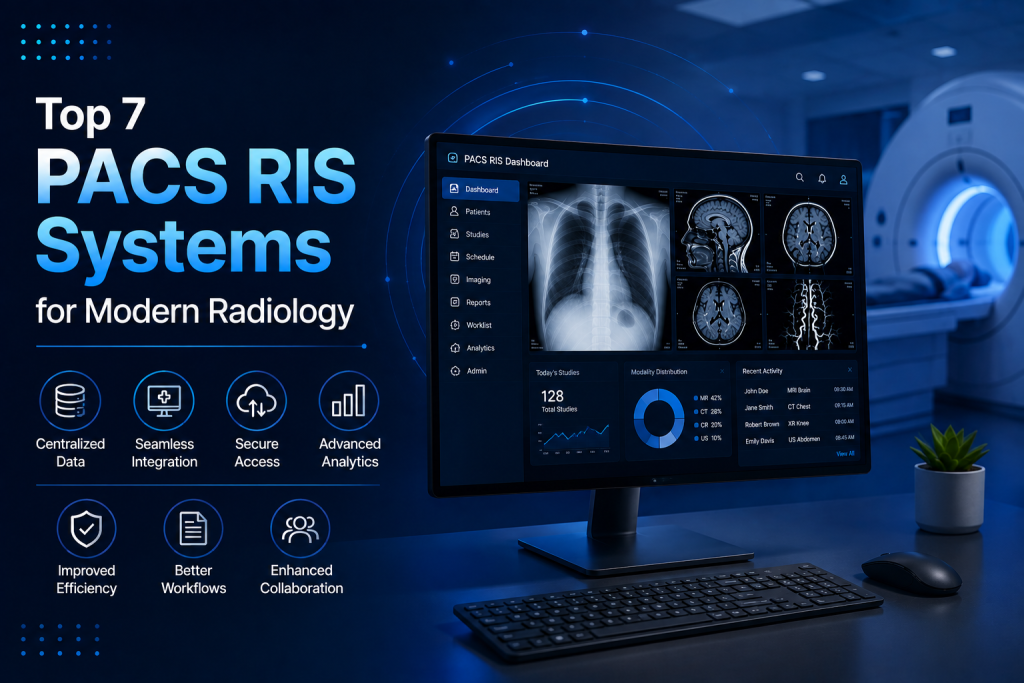
Modern radiology departments manage more imaging studies and patient information than ever before. CT scans, MRI studies, X-rays, ultrasound examinations, reports, and patient details all need to move smoothly through the healthcare workflow. When these systems work separately, radiology teams may face delays, repeated data entry, and difficulty tracking cases.
This is where PACS RIS systems become important. PACS helps manage and view medical images, while RIS supports radiology information and workflow management. When these technologies work together, hospitals and diagnostic centres can create a more connected radiology environment.
Here are seven PACS RIS systems and platforms that healthcare organisations can consider for modern radiology operations.
#1 Nandico
Nandico is a cloud-based medical imaging and radiology workflow platform designed for hospitals, diagnostic centres, radiologists, and teleradiology providers. It helps connect DICOM image management with modern radiology workflows.
Key Features
Nandico supports cloud-based PACS, DICOM image viewing, remote access, reporting workflows, and integration with healthcare systems. Its centralised platform helps authorised radiologists access imaging studies and manage cases from different locations.
Benefits
By connecting image access with radiology operations, Nandico can help reduce unnecessary workflow interruptions and support remote reporting. It is also suitable for healthcare organisations that need to manage increasing imaging volumes or connect multiple locations.
Why Choose Nandico?
Nandico focuses on creating a flexible digital environment for modern radiology. Its cloud-based approach supports teleradiology and remote access while helping healthcare providers manage medical imaging through a connected platform.
Best For
Hospitals, diagnostic centres, teleradiology providers, radiologists, and multi-location healthcare networks.
#2 Sectra Enterprise Imaging
Sectra provides enterprise imaging solutions that support radiology and other medical imaging workflows. Its platforms are designed to help healthcare organisations manage imaging data and connect different departments and locations.
#3 Fujifilm Synapse
Fujifilm Synapse supports PACS and enterprise imaging workflows for healthcare organisations. It helps professionals access and manage medical images while supporting radiology operations across different healthcare environments.
#4 Agfa Enterprise Imaging
Agfa Enterprise Imaging provides solutions for medical image management and connected healthcare workflows. Its platform is designed for organisations that need centralised access to imaging information across departments and locations.
#5 Philips IntelliSpace
Philips IntelliSpace provides healthcare technology solutions that support medical imaging and radiology workflows. Its ecosystem is designed to help healthcare professionals access imaging information and support clinical operations.
#6 GE HealthCare Imaging Solutions
GE HealthCare offers medical imaging and healthcare technology solutions for hospitals and diagnostic organisations. Its imaging ecosystem can support radiology departments managing advanced equipment and large volumes of diagnostic data.
#7 INFINITT Healthcare
INFINITT provides PACS and enterprise imaging solutions designed to support medical image management and diagnostic workflows. Its platforms can help healthcare organisations connect imaging operations and support collaboration between healthcare professionals.
Why PACS and RIS Integration Matters
PACS and RIS serve different but connected purposes. PACS focuses mainly on medical image storage, management, and viewing, while RIS helps manage radiology information, patient details, scheduling, worklists, and reporting processes.
When both systems work together, information can move more smoothly through the radiology department. Patient details and imaging orders can be connected with the correct studies, helping reduce manual data entry and improve case tracking.
Factors to Consider Before Choosing a PACS RIS System
Healthcare organisations should consider their imaging volume, number of users, and existing technology infrastructure. DICOM compatibility and support for different imaging modalities are essential.
Integration capabilities are also important. The system should be able to work with existing HIS, EMR, RIS, and other healthcare platforms where required. Remote access, reporting tools, security, user permissions, and scalability should also be evaluated.
Hospitals should choose a solution that can support their current workflow while allowing room for future growth.
Conclusion
PACS RIS systems play an important role in modern radiology by connecting medical image management with radiology information and workflow processes. When these systems work together effectively, hospitals and diagnostic centres can improve organisation, collaboration, and reporting efficiency.
Nandico offers a cloud-based approach that supports PACS, DICOM viewing, remote access, and teleradiology workflows. Other platforms, including Sectra, Fujifilm Synapse, Agfa Enterprise Imaging, Philips IntelliSpace, GE HealthCare solutions, and INFINITT, serve different enterprise imaging requirements.
The right choice depends on the organisation’s imaging volume, integration needs, reporting workflow, security requirements, and future expansion plans. A well-selected PACS RIS system can help create a more connected and efficient radiology department
FAQs
A PACS RIS system combines medical image management with radiology information and workflow management. PACS manages images, while RIS supports information, scheduling, worklists, and reporting processes.
Integration can help connect patient information, imaging orders, medical images, worklists, and reports, reducing repetitive manual work and improving workflow efficiency.
Yes. Modern platforms can support remote access to imaging studies and reporting workflows, allowing authorised radiologists to work from different locations.
Yes. Cloud-based PACS can provide flexible access, support remote reporting, and scale with increasing imaging volumes, depending on the healthcare organisation’s requirements.
The best system depends on the organisation’s needs. Nandico is a suitable option for healthcare providers looking for cloud-based PACS, DICOM viewing, remote access, and connected teleradiology workflows.