
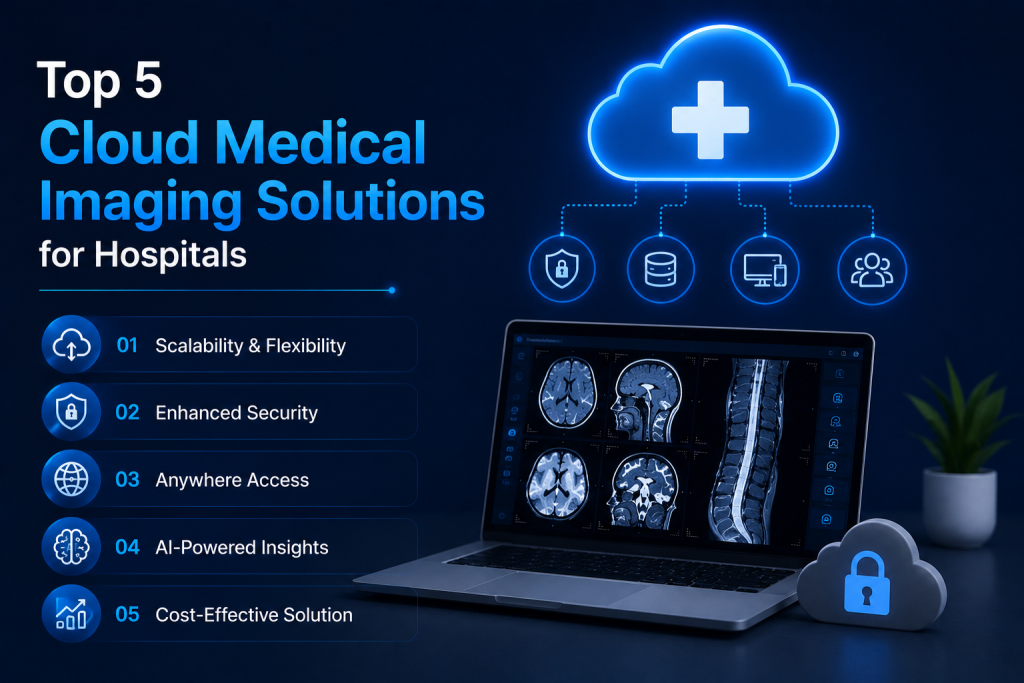
Hospitals generate a large amount of medical imaging data every day. CT scans, MRI studies, X-rays, ultrasound images, and other diagnostic files need to be stored, accessed, reviewed, and shared efficiently. As imaging volumes continue to grow, traditional systems that depend heavily on local servers can become difficult to manage.
Cloud medical imaging solutions offer hospitals a more flexible way to manage diagnostic images. They can support remote access, secure image management, radiology collaboration, and scalable storage. For hospitals with multiple departments or locations, cloud-based imaging can also help create a more connected workflow.
Here are five cloud medical imaging solutions that hospitals can consider for modern healthcare operations.
#1 Nandico
Nandico is a cloud-based medical imaging and PACS platform designed for hospitals, diagnostic centres, radiologists, and teleradiology providers. It helps healthcare organisations manage medical images through a centralised digital environment.
Key Features
Nandico supports DICOM image management, advanced image viewing, remote access, reporting workflows, and teleradiology operations. Authorised radiologists can access imaging studies from different locations, supporting hospitals that need flexible reporting and collaboration.
Benefits
A cloud-based platform can help hospitals reduce dependence on extensive local infrastructure and improve access to imaging studies. Nandico also supports connected radiology workflows, making it suitable for organisations managing growing imaging volumes or multiple healthcare locations.
Why Choose Nandico?
Nandico is designed around the needs of modern digital radiology. It combines cloud-based PACS capabilities with remote image access and teleradiology workflow support, helping hospitals create a more flexible imaging environment.
Best For
Hospitals, diagnostic centres, teleradiology providers, radiologists, and multi-location healthcare networks.
#2 Sectra Enterprise Imaging
Sectra provides enterprise imaging solutions for healthcare organisations. Its platform supports medical image management and diagnostic workflows across different departments and locations.
Hospitals can use enterprise imaging technology to connect imaging information and support collaboration between healthcare professionals. It is suitable for organisations managing complex clinical imaging environments.
#3 Fujifilm Synapse
Fujifilm Synapse provides PACS and enterprise imaging solutions for healthcare providers. It supports medical image access and radiology workflows, helping hospitals manage diagnostic studies digitally.
The platform can be considered by healthcare organisations looking for an established imaging solution to support their radiology operations and wider clinical workflows.
#4 Agfa Enterprise Imaging
Agfa Enterprise Imaging provides solutions for managing medical images and connecting healthcare workflows. Its technology is designed to help organisations access imaging information across departments and locations.
It can be suitable for hospitals looking for enterprise-level image management and collaboration capabilities.
#5 Visage Imaging
Visage Imaging offers enterprise imaging solutions focused on efficient access to medical images and diagnostic workflows. Its technology is designed to support healthcare organisations managing large imaging volumes.
The platform can be considered by hospitals looking for modern image management capabilities and connected radiology operations.
Benefits of Cloud Medical Imaging for Hospitals
Cloud imaging solutions can provide several benefits to hospitals. Remote access allows authorised radiologists and doctors to review studies from different locations. This can support teleradiology and specialist consultations.
Cloud platforms can also scale as imaging volumes increase. Hospitals may not need to continuously expand on-site infrastructure to support every increase in data. Centralised access can further help different departments and locations collaborate more efficiently.
Another benefit is workflow flexibility. When medical images can be accessed through a connected platform, radiologists can spend less time dealing with manual file transfers and more time reviewing cases.
Factors to Consider Before Choosing a Cloud Imaging Solution
Hospitals should evaluate DICOM compatibility, image viewing performance, security, user access controls, and scalability. Integration with RIS, HIS, EMR, and other healthcare systems may also be important for creating a smooth workflow.
The solution should support the imaging modalities used by the hospital and provide reliable access for authorised users. Technical support, data management, remote reporting capabilities, and future expansion should also be considered before making a decision.
Conclusion
Cloud medical imaging solutions are helping hospitals modernise the way they manage diagnostic images. They can support remote access, connected radiology workflows, collaboration, and the management of growing imaging volumes.
Nandico offers a cloud-based approach that combines medical image management, DICOM viewing, PACS capabilities, and teleradiology support. Sectra, Fujifilm Synapse, Agfa Enterprise Imaging, and Visage Imaging provide other options for hospitals with different enterprise imaging requirements.
The right solution depends on the hospital’s imaging volume, workflow, security needs, integration requirements, and future growth plans. Choosing a scalable and reliable cloud imaging platform can help hospitals build a more efficient and connected digital radiology environment.
FAQs
Cloud medical imaging solutions allow hospitals to store, manage, access, and view medical images through cloud-based infrastructure.
Yes. They can support remote access, collaboration, teleradiology, scalable image management, and connected radiology workflows.
Yes. Most modern platforms support common imaging modalities such as CT, MRI, X-ray, and ultrasound, although features may vary between solutions.
Many modern platforms support integration with healthcare systems such as RIS, HIS, and EMR, helping improve the flow of patient and imaging information.
Nandico is designed to support cloud-based PACS, DICOM image management, remote access, and teleradiology workflows for hospitals and other healthcare organisations.