
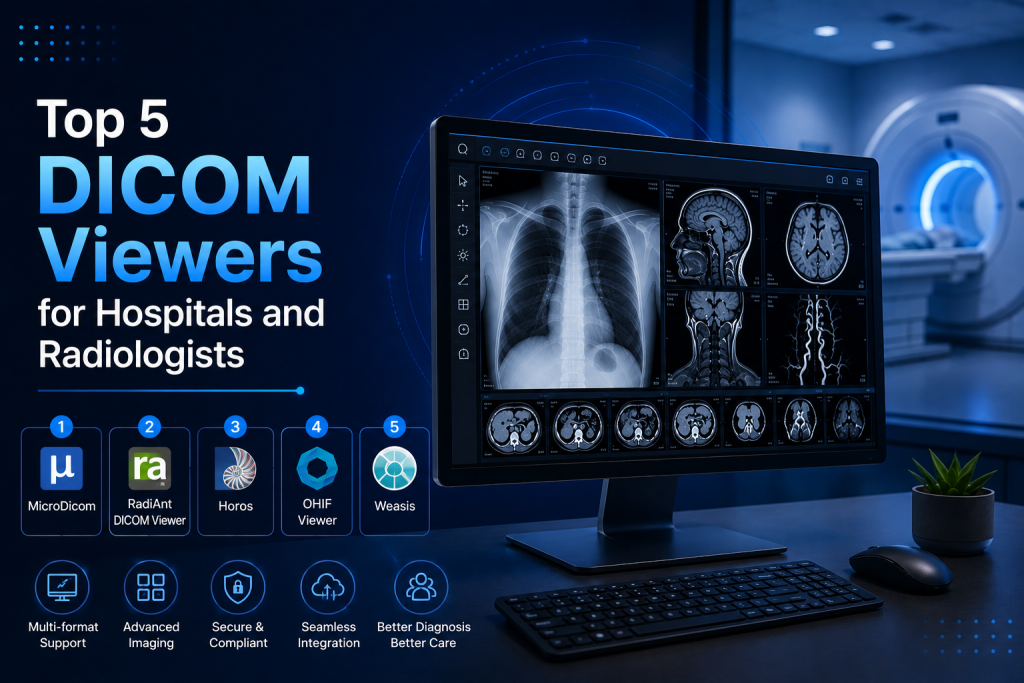
Medical imaging is an important part of modern diagnosis. Radiologists and healthcare professionals work with CT scans, MRI studies, X-rays, and other medical images every day. To review these studies properly, they need a reliable DICOM viewer that can open medical images, provide useful visualisation tools, and support an efficient reporting workflow.
DICOM viewers help healthcare professionals access and analyse medical images digitally. For a better understanding of how these files and viewers work, healthcare professionals can also explore understanding DICOM files and DICOM viewers.
Here are five DICOM viewer solutions that hospitals and radiologists can consider for modern medical imaging workflows.
#1 Nandico
Nandico is a cloud-based medical imaging platform with advanced DICOM viewing capabilities. It is designed for hospitals, diagnostic centres, radiologists, and teleradiology providers that need flexible access to medical imaging studies.
Key Features
Nandico supports DICOM image management, web-based image viewing, remote access, and radiology workflow management. Radiologists can access imaging studies from different locations, making it suitable for hospitals and teams involved in remote reporting.
The platform is designed to support common imaging modalities, including CT, MRI, and X-ray studies. Its cloud-based structure also helps healthcare organisations manage imaging data without depending entirely on traditional local infrastructure.
Benefits
A centralised DICOM viewer can make it easier for radiologists to access studies and collaborate with other healthcare professionals. Nandico also supports connected workflows for organisations handling multiple locations or remote radiology operations.
Why Choose Nandico?
Nandico combines DICOM viewing with broader PACS and teleradiology capabilities.This makes it suitable for organisations that need more than a standalone image viewer and want to connect image access with their wider radiology workflow. Organisations handling remote reporting can also benefit from a dedicated teleradiology PACS workflow.
Best For
Hospitals, diagnostic centres, radiologists, teleradiology providers, and multi-location healthcare networks.
#2 RadiAnt DICOM Viewer
RadiAnt is a popular DICOM viewer designed for medical image viewing and analysis. It supports different imaging modalities and provides tools for image manipulation, measurements, and study review. It is commonly considered by radiologists and healthcare professionals who need a dedicated desktop-based solution.
#3 Weasis
Weasis is an open-source DICOM viewer that supports medical image visualisation across different healthcare environments. It offers tools for viewing and analysing imaging studies and can be used by healthcare organisations looking for a flexible DICOM viewing solution.
#4 MicroDicom
MicroDicom is a DICOM viewer designed for viewing and managing medical images. It supports common imaging studies and provides useful tools for image review. Its straightforward interface makes it suitable for users who need a practical solution for opening and examining DICOM files.
#5 Horos
Horos is an open-source medical image viewer designed primarily for macOS users. It supports the viewing and analysis of DICOM studies and offers tools for working with different types of medical imaging data. It can be useful for healthcare professionals looking for an open-source imaging viewer.
Features to Consider Before Choosing a DICOM Viewer
Hospitals and radiologists should consider more than just whether a viewer can open DICOM files. Image loading performance is important, especially when working with large CT and MRI studies.
The viewer should also support the imaging modalities used by the organisation. Tools for measurements, image comparison, windowing, multiplanar views, and other clinical requirements can improve the viewing experience.
For hospitals and teleradiology providers, cloud access and secure remote viewing may also be important. Remote reporting with PACS can further help radiologists access and interpret studies from different locations.
Data security should always be considered when dealing with patient imaging. Healthcare organisations should select solutions with appropriate access controls and secure data management.
Conclusion
A reliable DICOM viewer is an important tool for radiologists and healthcare organisations. It helps professionals access and review medical images efficiently, supporting better-connected diagnostic workflows.
Nandico offers a broader cloud-based approach by combining DICOM viewing with PACS, remote access, and teleradiology workflow capabilities. Hospitals transitioning from traditional systems can also explore the benefits of cloud-based medical imaging solutions.
The best DICOM viewer depends on the organisation’s imaging volume, required features, remote access needs, operating environment, and integration requirements. Hospitals and radiologists should choose a solution that supports both their current workflow and future imaging needs.
FAQs
A DICOM viewer is used to open, view, and analyse medical images such as CT scans, MRI studies, X-rays, and ultrasound images stored in the DICOM format.
The best option depends on the hospital’s requirements. Nandico is suitable for hospitals looking for cloud-based DICOM viewing combined with PACS and remote radiology workflow capabilities.
Yes. Cloud-based DICOM viewers can allow authorised radiologists to access and review medical images remotely, making them useful for teleradiology.
Yes. Many DICOM viewers are designed to work with PACS platforms, allowing users to access and review images stored within a larger medical imaging system.
Radiologists should consider image loading speed, modality support, measurement tools, image comparison, remote access, security, and integration with PACS or other healthcare systems.