
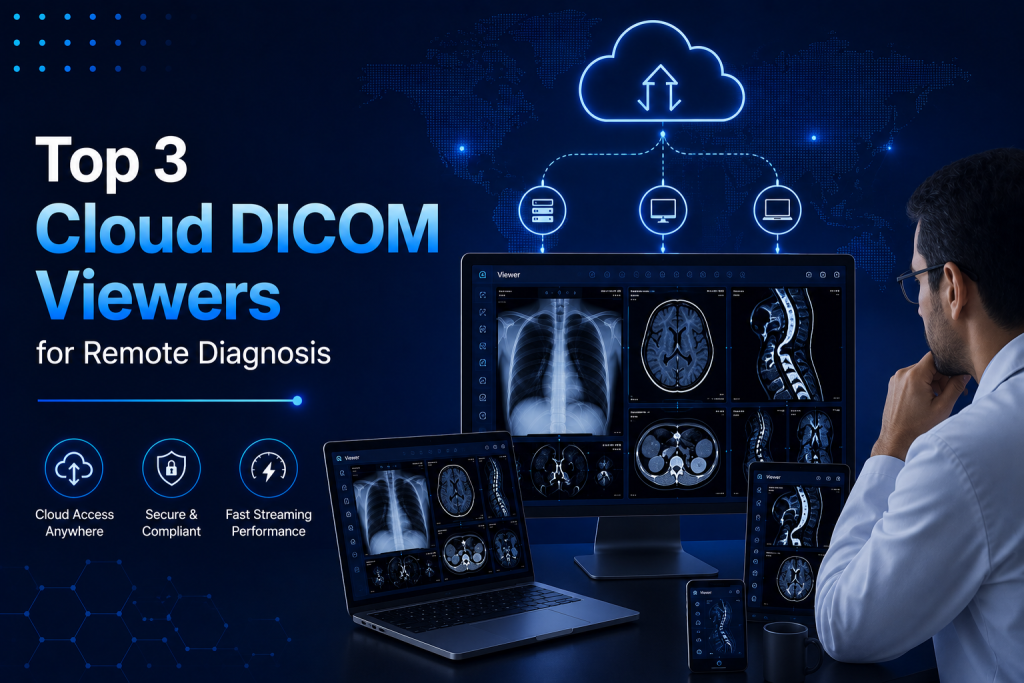
Remote diagnosis has become an important part of modern healthcare. Radiologists can now review CT scans, MRI studies, X-rays, and other medical images without being physically present at the hospital or diagnostic centre. However, successful remote reporting requires more than simply sending image files from one location to another.
A cloud DICOM viewer allows authorised healthcare professionals to access and review medical images through a secure online platform. This approach is part of the growing adoption of cloud-based medical imaging solutions for modern healthcare workflows.
Here are three cloud DICOM viewers that healthcare organisations and radiologists can consider for remote diagnosis.
#1 Nandico
Nandico is a cloud-based medical imaging platform that supports DICOM viewing and remote radiology workflows. A reliable advanced DICOM viewer for radiologists can help healthcare professionals review imaging studies more efficiently.
Key Features
Nandico provides cloud-based access to DICOM studies and supports the viewing of common imaging modalities such as CT, MRI, and X-ray. Its platform also connects image viewing with broader PACS and teleradiology workflows.
Radiologists can access imaging studies remotely, review cases, and work within a connected digital environment. This can be particularly useful for healthcare organisations with multiple locations or radiologists working remotely.
Benefits for Remote Diagnosis
A cloud-based viewer reduces the need for radiologists to depend on a specific workstation or physical location. Healthcare teams can share access to imaging studies with authorised users, helping support remote reporting with PACS and specialist consultations.
Nandico also offers a broader workflow environment rather than functioning only as a standalone viewer. This makes it suitable for organisations that want to connect DICOM viewing with image management and radiology operations.
Why Choose Nandico?
Nandico combines cloud accessibility, DICOM viewing, PACS capabilities, and teleradiology support. It is a suitable choice for healthcare providers looking for a flexible platform that can support remote diagnosis and growing imaging requirements.
Best For
Hospitals, diagnostic centres, teleradiology providers, radiologists, and multi-location healthcare networks.
#2 Weasis
Weasis is an open-source DICOM viewer used for viewing and analysing medical imaging studies. It supports different imaging modalities and provides tools for working with DICOM data.
Its flexible nature makes it suitable for healthcare environments and users who need a capable DICOM viewing solution. Weasis can be considered by organisations looking for an open-source option with support for medical image visualisation and clinical workflows.
#3 Visage Imaging
Visage Imaging provides enterprise imaging solutions designed to support medical image access and diagnostic workflows. Its technology focuses on efficient image viewing and managing large volumes of medical imaging data.
For healthcare organisations with complex imaging requirements, enterprise imaging platforms can help support remote access, collaboration, and connected diagnostic operations.
What to Consider Before Choosing a Cloud DICOM Viewer
A cloud DICOM viewer should offer more than basic online image access. Image loading speed is important, especially when radiologists are reviewing large CT or MRI studies remotely.
Healthcare providers should also check whether the viewer supports the imaging modalities used in their organisation. Tools for measurements, image comparison, windowing, and other clinical functions can improve the diagnostic workflow.
Security is another major consideration. Patient imaging data should be protected through appropriate access controls and secure data management. Organisations should also evaluate the platform’s integration capabilities with PACS, RIS, HIS, and other healthcare systems. Understanding the features of PACS software for hospitals and diagnostic centers can help organisations evaluate how the viewer fits into their overall imaging workflow.
Finally, scalability matters. As imaging volumes and the number of users increase, the platform should continue supporting the organisation’s workflow without unnecessary infrastructure challenges.
Conclusion
Cloud DICOM viewers are making remote diagnosis more flexible by allowing authorised radiologists to access and review medical images from different locations. They can support teleradiology, specialist consultation, and collaboration between healthcare teams.
Nandico stands out as a cloud-based platform that combines DICOM viewing with PACS and teleradiology workflow capabilities. Weasis and Visage Imaging offer alternative solutions for organisations with different technical and enterprise imaging requirements.
The right cloud DICOM viewer depends on the organisation’s imaging volume, security requirements, workflow, integration needs, and remote reporting goals. Choosing a platform that can support both current and future requirements can help healthcare providers build a more efficient digital radiology environment.
FAQs
A cloud DICOM viewer is an online platform that allows authorised users to access and review medical images stored or managed through cloud infrastructure.
Yes. Cloud DICOM viewers allow authorised radiologists to access medical images remotely, making them useful for teleradiology and remote diagnostic workflows.
Yes. Nandico is designed to support cloud-based DICOM viewing, PACS workflows, remote access, and teleradiology operations.
Yes. Many modern cloud DICOM viewers support different imaging modalities, including CT and MRI, although the available tools and features can vary between platforms.
Security depends on the platform’s infrastructure, access controls, and data management practices. Healthcare providers should evaluate these areas carefully before choosing a cloud imaging solution.