
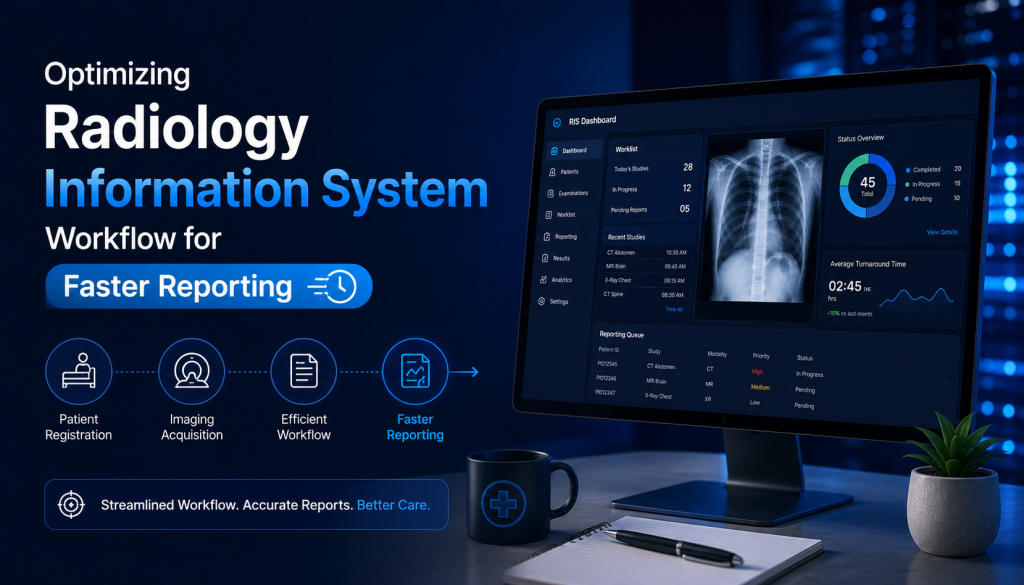
Speed and accuracy are critical in radiology. Doctors depend on imaging reports to diagnose diseases, plan treatments, and respond to emergencies. However, as imaging volumes continue to increase, many radiology departments struggle with delayed reporting, workflow bottlenecks, and administrative overload.
A major reason for these delays is inefficient workflow management. Radiologists often deal with disconnected systems, manual data entry, poor communication between departments, and unorganized worklists. These issues slow the reporting process and reduce overall efficiency.
This is why hospitals and imaging centers are focusing on improving their Radiology Information System workflow. A well-optimized RIS workflow helps radiology departments manage patient information, imaging orders, scheduling, reporting, and communication more efficiently.
By streamlining workflows, healthcare providers can reduce reporting delays, improve productivity, and deliver faster patient care.
This blog explains how optimizing Radiology Information System workflow supports faster reporting and improves modern radiology operations.
Understanding Radiology Information System Workflow
A Radiology Information System (RIS) is software designed to manage radiology department operations. It handles tasks such as:
- Patient registration
- Appointment scheduling
- Imaging order management
- Workflow tracking
- Reporting
- Billing and documentation
RIS works closely with PACS and hospital systems to create a connected imaging environment.
When workflows are optimized properly, radiologists and staff can manage imaging studies more efficiently from patient registration to final report delivery.
Common Workflow Challenges in Radiology Departments
Many hospitals still face workflow inefficiencies that slow reporting and increase administrative burden.
Manual Data Entry
Entering patient information repeatedly across multiple systems increases the risk of mistakes and wastes valuable time.
Disconnected Systems
When RIS, PACS, and hospital systems do not integrate properly, radiologists must switch between platforms to access patient data and imaging studies.
Unorganized Worklists
Poor case prioritization can delay urgent reports and create workflow confusion during busy periods.
Communication Delays
Slow coordination between radiologists, technicians, and physicians can affect patient management and reporting speed.
How Workflow Optimization Improves Reporting Speed
An optimized RIS workflow creates a smoother and more connected radiology environment.
By reducing unnecessary steps and automating repetitive processes, healthcare facilities can improve reporting efficiency significantly.
Automated Patient Data Management
One of the most effective ways to improve workflow is reducing manual data handling.
Optimized RIS systems automatically synchronize patient demographics, imaging orders, and appointment information across integrated platforms.
This helps departments:
- Eliminate duplicate data entry
- Reduce clerical errors
- Improve patient identification accuracy
- Save administrative time
Radiology staff can focus more on patient care and less on paperwork.
Faster Imaging Order Processing
Efficient imaging order management is essential for fast reporting. Delays often occur when exam requests are incomplete or manually transferred between departments.
RIS workflow optimization allows imaging orders to move automatically from hospital systems to radiology worklists.
Benefits include:
- Faster exam scheduling
- Improved communication between departments
- Reduced risk of missing information
- Better exam coordination
This helps radiology departments process studies more efficiently from the beginning.
Centralized Worklists for Radiologists
Radiologists often handle large numbers of imaging studies daily. Without organized workflows, prioritizing urgent cases becomes difficult.
Modern RIS platforms provide centralized and intelligent worklists that allow radiologists to:
- View pending studies in real time
- Prioritize emergency cases
- Track reporting progress
- Manage workloads more effectively
Structured worklists improve workflow visibility and reduce delays in report completion.
Better Integration with PACS and Hospital Systems
Efficient reporting depends heavily on smooth integration between RIS, PACS, HIS, and electronic medical records.
Optimized RIS workflows allow radiologists to access:
- Imaging studies
- Patient history
- Previous reports
- Clinical notes
From one connected interface.
This eliminates the need to constantly switch between systems, helping radiologists stay focused during interpretation and reporting.
Supporting Faster Emergency Reporting
Emergency departments depend on rapid radiology reporting for conditions such as:
- Stroke
- Trauma injuries
- Internal bleeding
- Pulmonary embolism
- Brain hemorrhage
RIS workflow optimization helps prioritize urgent studies automatically and ensures radiologists receive emergency cases quickly.
Faster workflow coordination improves response times and supports better patient outcomes during critical situations.
Improved Communication Between Healthcare Teams
Radiology workflows involve collaboration between technicians, radiologists, physicians, and administrative staff. Communication gaps can slow operations and create confusion.
Optimized RIS systems provide real-time status updates that improve coordination between departments.
Healthcare teams can:
- Track exam progress
- Monitor report status
- Access completed reports quickly
- Coordinate patient management more efficiently
Better communication supports smoother workflows and faster clinical decision-making.
Reducing Reporting Delays Through Automation
Automation plays a major role in modern radiology workflow optimization. RIS platforms can automate repetitive tasks such as:
- Case assignment
- Report distribution
- Exam tracking
- Notification alerts
This reduces administrative workload and allows radiologists to spend more time focusing on diagnosis and reporting accuracy.
Supporting Remote Reporting and Teleradiology
Many healthcare providers now rely on remote radiology services for after-hours coverage and specialist consultations.
Optimized RIS workflows support teleradiology by allowing radiologists to securely access worklists, imaging studies, and reports from different locations.
This flexibility improves reporting coverage and helps hospitals maintain continuous radiology services.
Better Performance Monitoring and Workflow Analysis
Modern RIS platforms provide analytics tools that help hospitals monitor workflow performance. Administrators can track:
- Report turnaround times
- Imaging volumes
- Radiologist productivity
- Workflow bottlenecks
This data helps healthcare facilities identify areas for improvement and maintain efficient radiology operations.
Preparing Radiology Departments for the Future
Healthcare technology is evolving rapidly with AI-assisted reporting, cloud PACS, and workflow automation becoming more common.
An optimized RIS workflow creates a strong digital foundation for future innovations and scalable radiology services. Hospitals can adapt more easily to growing imaging demands while improving operational efficiency.
Conclusion
Fast and efficient reporting is essential for modern healthcare, but many radiology departments still face workflow challenges caused by disconnected systems, manual processes, and communication delays.
Optimizing Radiology Information System workflow helps healthcare providers improve reporting speed, reduce errors, automate administrative tasks, and create smoother collaboration between departments. By integrating RIS with PACS and hospital systems, radiologists can work more efficiently while delivering faster and more accurate diagnoses.
As imaging volumes continue to grow, workflow optimization is becoming a critical part of building future-ready radiology departments that support both operational efficiency and better patient care.
FAQs
A Radiology Information System (RIS) workflow manages key radiology processes, including patient registration, scheduling, imaging orders, reporting, and billing. An optimized workflow helps departments improve efficiency, reduce manual tasks, and deliver imaging reports more quickly.
Optimized RIS workflows automate routine tasks, organize worklists, and integrate with PACS and hospital systems. This reduces delays, minimizes manual data entry, and allows radiologists to access patient information and imaging studies faster for quicker report generation.
RIS integration connects radiology systems with PACS, HIS, and electronic medical records, ensuring seamless data sharing across departments. This improves communication, reduces duplicate entries, minimizes errors, and creates a more efficient reporting workflow.
Yes, an optimized RIS workflow helps prioritize urgent imaging studies, updates worklists in real time, and speeds up report delivery. This enables radiologists to respond faster to emergencies such as stroke, trauma, and internal bleeding, supporting timely patient treatment.
Improving RIS workflow increases reporting efficiency, reduces administrative workload, enhances collaboration between healthcare teams, minimizes errors, and supports remote reporting. These benefits help hospitals provide faster diagnoses, better patient care, and more streamlined radiology operations.