
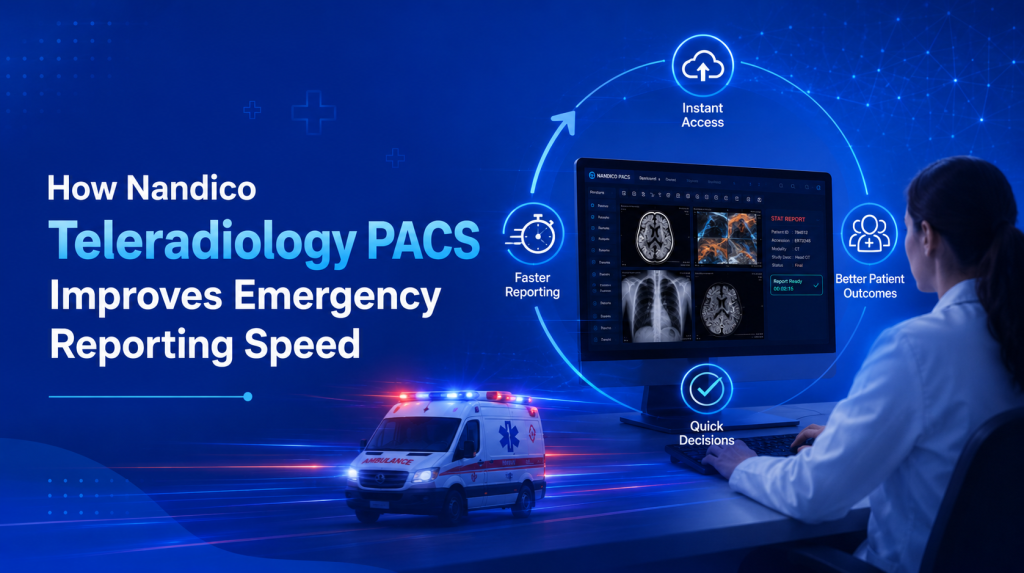
In emergency healthcare, time is everything. A delay of even a few minutes in radiology reporting can affect diagnosis, treatment decisions, and patient outcomes. Whether it is a stroke, internal bleeding, trauma case, or lung emergency, doctors depend on fast imaging reports to take immediate action.
Radiology departments today handle a huge number of scans every day. At the same time, hospitals expect faster turnaround times and accurate reporting, especially during emergencies. Traditional PACS systems often struggle in these situations because they rely heavily on local infrastructure, fixed workstations, and slow image-sharing methods.
This is where Nandico Teleradiology PACS is helping modern healthcare providers improve emergency reporting speed. With cloud-based access, remote collaboration, and optimized workflow management, Nandico allows radiologists to review urgent cases faster and deliver reports without unnecessary delays.
This blog explains how Nandico improves emergency radiology workflows and supports faster patient care.
Why Emergency Reporting Needs Speed
Emergency radiology is very different from routine imaging. In critical situations, doctors cannot wait hours for reports. Quick diagnosis helps clinicians start treatment immediately.
Some common emergency imaging cases include:
- Stroke detection through CT brain scans
- Trauma assessment after accidents
- Chest imaging for breathing emergencies
- Internal bleeding and abdominal injuries
- Spine and fracture evaluation
In all these cases, radiologists must access scans quickly, review images efficiently, and send reports without delay. Slow systems can create bottlenecks that impact patient care.
The Challenges with Traditional PACS Systems
Many hospitals still use older PACS systems that were designed years ago. These systems often create problems during emergency reporting.
Slow Image Loading
Large CT and MRI studies may take time to load, especially during peak hours. Radiologists lose valuable time waiting for scans to open.
Limited Remote Access
Traditional PACS are usually tied to hospital workstations. If a specialist is unavailable on-site, accessing studies remotely becomes difficult.
Delayed Image Sharing
Sharing urgent studies between hospitals or specialists may involve manual transfers, external drives, or VPN setups. This slows down decision-making.
Fragmented Workflow
Radiologists often switch between different systems for images, reports, and patient information. This interrupts concentration and reduces efficiency.
How Nandico Teleradiology PACS Improves Emergency Reporting
Nandico is designed to support modern emergency radiology workflows. It combines cloud technology, fast image access, and remote collaboration to reduce reporting delays.
Faster Image Access for Critical Cases
One of the biggest advantages of Nandico PACS is fast image loading.
The platform uses optimized cloud streaming technology that allows imaging studies to open quickly, even for large CT and MRI scans. Images begin displaying immediately while additional details continue loading in the background.
This helps radiologists:
- Review urgent studies faster
- Reduce waiting time between cases
- Improve reporting speed during high workloads
In emergency situations, saving even a few minutes can make a major difference in patient treatment.
Remote Reporting Without Delays
Emergencies do not follow office hours. Hospitals often need radiologists to report scans late at night, early morning, or during weekends.
Nandico Teleradiology PACS supports efficient remote reporting that enables radiologists to securely access studies from anywhere using a web-based platform. There is no dependence on physical workstations or complicated local setups.
Radiologists can:
- Review emergency scans from home
- Access studies while traveling
- Provide urgent second opinions remotely
- Support multiple hospitals from one location
This flexibility ensures hospitals receive continuous radiology support at all times.
Better Collaboration Between Specialists
Some emergency cases require immediate consultation between multiple doctors or specialists. Nandico simplifies collaboration through secure image sharing and real-time access.
With Nandico:
- Multiple users can access the same study simultaneously
- Cases can be forwarded instantly to specialists
- Clinicians and radiologists can review findings together
This improves communication and helps doctors make faster treatment decisions for critical patients.
Smart Workflow for Faster Reporting
Emergency departments are busy environments, and radiologists need organized workflows to avoid delays.
Nandico helps streamline operations by offering:
- Centralized worklists for urgent studies
- Easy access to patient history and prior scans
- Integrated reporting tools within the same platform
- Faster case prioritization
Instead of switching between different systems, radiologists can manage everything from a single interface. This improves focus and reduces reporting time.
Reliable Performance During High Imaging Volumes
Hospitals often experience sudden spikes in imaging demand, especially during emergencies or trauma situations. Older systems may slow down under pressure.
Nandico’s cloud-based architecture is designed to handle high imaging volumes efficiently. Even during busy periods, radiologists can continue reviewing and reporting studies without major performance issues.
This reliability helps emergency departments maintain smooth operations during critical situations.
Secure Access to Patient Data
Emergency reporting requires fast access to imaging data, but security cannot be compromised.
Nandico PACS includes:
- Encrypted image transmission
- Secure cloud storage
- Role-based access control
- Audit tracking for all activities
This ensures that patient information remains protected while still being quickly accessible to authorized users.
Supporting Faster Patient Care
The ultimate goal of emergency radiology is better patient outcomes. Faster reports help doctors:
- Begin treatment quickly
- Reduce waiting time in emergency departments
- Make informed clinical decisions
- Improve survival chances in critical conditions
By improving reporting speed and workflow efficiency, Nandico supports hospitals in delivering timely and effective care.
Conclusion
Emergency radiology depends on speed, accuracy, and reliable access to imaging studies. Traditional PACS systems often struggle to meet the demands of modern emergency healthcare, leading to delays in diagnosis and treatment.
Nandico Teleradiology PACS improves emergency reporting speed by providing fast image access, remote reporting capabilities, seamless collaboration, and efficient workflow management. Its cloud-based design allows radiologists to work from anywhere while maintaining secure access to patient data.
As hospitals continue to handle growing imaging volumes and increasing emergency cases, solutions like Nandico are becoming essential for faster diagnostics and better patient care. Nandico is not just improving radiology workflows—it is helping healthcare providers respond faster when every second matters.
Nandico Teleradiology PACS for Faster Care
FAQs :
1. What is Nandico Teleradiology PACS?
Nandico Teleradiology PACS is a cloud-based imaging platform that helps hospitals manage, access, and report medical scans quickly and securely from any location.
2. How does Nandico improve emergency reporting speed?
Nandico provides fast image loading, centralized worklists, integrated reporting tools, and remote access, helping radiologists review urgent cases without delays.
3. Can radiologists access Nandico remotely?
Yes, authorized radiologists can securely access imaging studies from home, clinics, or multiple hospitals using Nandico’s web-based platform.
4. Is Nandico suitable for high imaging volumes?
Absolutely. Nandico’s cloud architecture is built to handle large CT, MRI, and emergency imaging workloads while maintaining smooth performance.
5. How does Nandico support collaboration in emergency care?
Nandico allows multiple specialists to access the same study simultaneously, enabling faster consultations, real-time discussions, and quicker treatment decisions.