
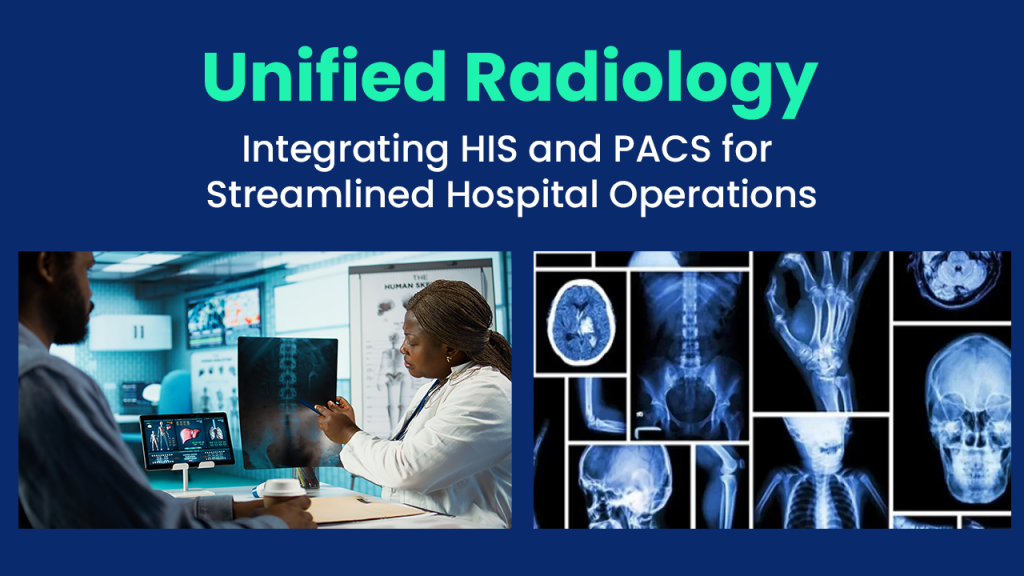
In many hospitals, radiology works at the center of diagnosis. Doctors depend on fast, clear imaging reports to make the right decisions for their patients. But when hospital systems are disconnected—when HIS and PACS operate separately—radiologists and physicians often struggle with delays, missing information, manual tasks, and unnecessary back-and-forth.
This is exactly why integrating HIS (Hospital Information System) with PACS (Picture Archiving and Communication System) has become so important. And solutions like Nandico PACS show how powerful a unified system can be for smooth hospital operations.
The Problem with Separate HIS and PACS Systems
In many hospitals, HIS and PACS still work like two different worlds.
Here’s what usually happens:
- Doctors order a scan through the HIS
- Radiology gets the request
- Images are stored separately in PACS
- Reports must be manually pushed back to HIS
- Doctors wait longer for final results
This back-and-forth wastes time and often leads to confusion.
If the systems don’t “talk,” staff spends more time fixing errors than helping patients.
What Happens When HIS and PACS Work Together
Integrating the two systems changes everything.
Instead of separate platforms, hospitals get one connected workflow where patient data, images, reports, and doctor instructions move smoothly across departments.
Here’s how integration helps:
1. Faster Image Access for Doctors
The moment an image is captured and saved in Nandico PACS, it becomes visible in the HIS.
Physicians don’t need to call radiology or wait for email updates—they simply open the HIS and view the study instantly.
2. Radiologists Spend Less Time on Manual Tasks
Without integration, radiologists manually match patient info, import details, or attach scans to reports.
Integration removes these tasks completely.
Information flows automatically from HIS to PACS, reducing errors and saving time.
3. No More Duplicate Entry
Technicians no longer have to type patient details twice.
The HIS sends accurate patient demographics directly to Nandico PACS, cutting down mistakes and improving record quality.
4. Faster Reporting Cycle
Because everything is connected:
- The doctor orders a scan
- PACS receives it immediately
- Radiologist views images
- Report goes back to the HIS automatically
This creates a natural, smooth loop that speeds up the entire diagnostic cycle.
5. Better Team Collaboration
Doctors, technicians, radiologists, and nurses all look at the same updated information.
No misunderstandings.
No mixed-up patient information.
No time wasted.
6. Improved Patient Experience
Patients don’t see the technical side, but they feel the benefits:
- Shorter wait times
- Fewer repeated tests
- Faster diagnosis
- More confidence in the hospital system
When technology works well, patient care naturally improves.
How Nandico PACS Makes Integration Smooth
Every hospital is different, so integration is often a challenge.
But Nandico PACS is built to work easily with most HIS platforms.
Hospitals choose Nandico because:
- It supports industry-standard communication (HL7 / DICOM)
- It connects with existing HIS systems smoothly
- It keeps data secure and compliant
- It creates a unified radiology workflow without disturbing ongoing operations
Instead of forcing hospitals to change everything, Nandico PACS adapts to the current system.
Results Hospitals See After Integration
Hospitals that integrated Nandico PACS with their HIS experienced:
- Shorter reporting times
- Reduced workload on radiologists
- Fewer patient identification errors
- Better communication between departments
- Higher satisfaction among doctors and nursing staff
- A more stable and predictable workflow
Simple integrations often bring the greatest impact.
Conclusion
Radiology is one of the most important departments in any hospital. When HIS and PACS work separately, delays and confusion become a part of daily life. But with a unified system—powered by solutions like Nandico PACS—hospitals enjoy smooth operations, faster diagnosis, and better patient care.
Integration isn’t just a technical upgrade.
It’s a step toward a smarter, connected, and more efficient hospital system.
FAQs :
Integration allows patient data, imaging studies, and reports to move automatically between systems. This removes delays, reduces manual work, and ensures doctors receive accurate information faster.
When HIS and PACS are connected, radiologists no longer enter patient details manually or chase missing information. This saves time, lowers stress, and allows them to focus on diagnostic quality.
Yes. Automated data transfer reduces the risk of mismatched patient records, duplicate entries, and reporting mistakes, leading to safer and more reliable clinical workflows.
Nandico PACS supports standard healthcare protocols and adapts to existing hospital systems. This allows seamless integration without disrupting daily operations or requiring major system changes.
Hospitals experience faster reporting cycles, improved interdepartmental communication, fewer repeated tests, and higher satisfaction among clinicians and patients.