
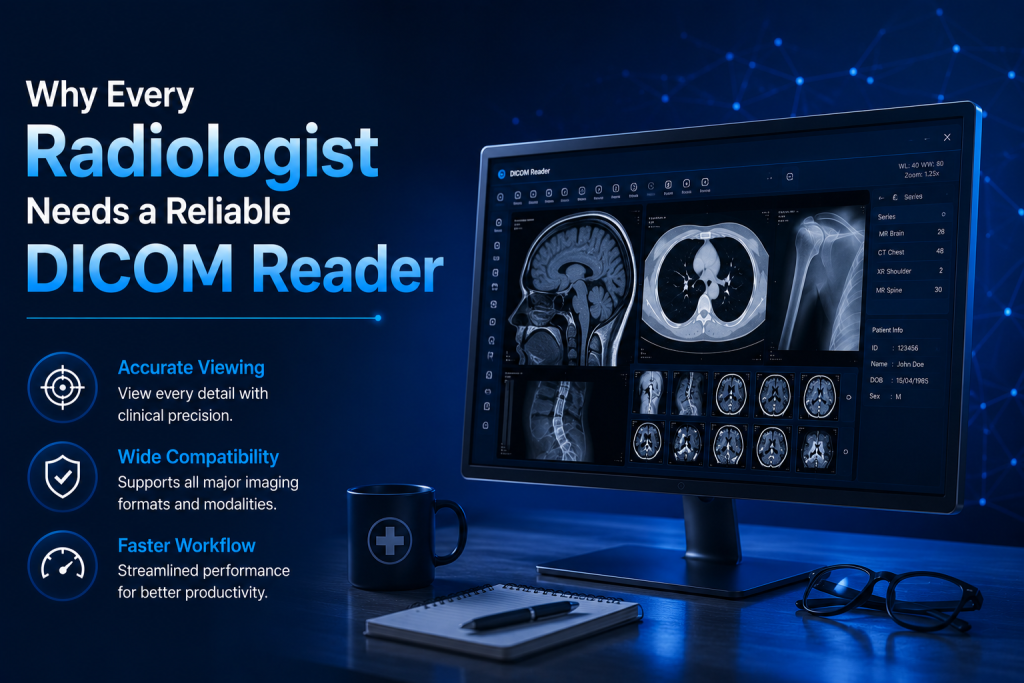
Radiology is a cornerstone of modern healthcare, providing critical imaging information for diagnosing diseases, guiding treatments, and monitoring patient progress. From X-rays and CT scans to MRIs and ultrasounds, radiologists rely on accurate image interpretation to make life-saving decisions.
At the heart of this process lies the DICOM (Digital Imaging and Communications in Medicine) standard, which ensures that medical images are stored, transmitted, and displayed consistently across systems. To fully utilize DICOM files, radiologists require a reliable DICOM reader, a tool that allows them to view, analyze, and manipulate imaging studies efficiently.
Understanding DICOM and Its Importance
DICOM is the global standard for handling, storing, and sharing medical images. Every modern imaging modality—CT, MRI, ultrasound, or X-ray—produces images in the DICOM format.
The DICOM standard ensures that:
- Images are compatible across different devices and software
- Patient data is embedded within the image for accurate identification
- Metadata such as study date, modality, and acquisition parameters is preserved
Without a proper DICOM reader, radiologists risk misinterpreting images, overlooking critical details, or experiencing workflow inefficiencies. A reliable reader ensures that every image is displayed correctly and is fully analyzable.
Accurate Interpretation of Imaging Studies
Radiologists’ primary responsibility is to provide accurate and timely diagnoses. A reliable DICOM reader enhances this by offering:
- High-resolution image display: Critical for detecting small lesions or subtle abnormalities
- Zoom, pan, and scroll capabilities: Allows detailed examination of each slice in CT or MRI studies
- Windowing and leveling: Adjusting contrast and brightness to highlight specific tissues
These tools help radiologists identify issues that might otherwise go unnoticed, reducing diagnostic errors and improving patient outcomes.
Supporting Multi-Modality Imaging
Modern imaging centers use multiple modalities, and studies often need to be compared across different types of scans. A dependable DICOM reader supports:
- CT, MRI, X-ray, and ultrasound formats
- Fusion of images from different modalities for comprehensive evaluation
- Side-by-side comparison of current and prior studies
This versatility is essential for accurate diagnosis, treatment planning, and monitoring disease progression.
Streamlining Workflow and Efficiency
Radiologists often handle high volumes of studies daily. A DICOM reader that integrates with PACS and RIS systems can streamline workflow significantly:
- Automatic retrieval of studies from PACS
- Worklist integration for prioritized review
- Annotation, measurement, and report linking directly within the reader
By reducing time spent navigating images and managing files manually, radiologists can focus on interpretation, leading to faster reporting and more efficient patient care.
Enabling Remote and Teleradiology Work
Teleradiology has become an essential part of healthcare, allowing radiologists to read studies from remote locations. A reliable DICOM reader is critical for remote reporting because it:
- Ensures consistent image quality across different devices
- Allows secure access to cloud-based imaging studies
- Supports real-time collaboration with colleagues or specialists
Remote accessibility ensures that even hospitals in rural or underserved areas can receive timely expert interpretations.
Enhancing Collaboration
Complex cases often require input from multiple radiologists or consultation with referring physicians. A DICOM reader with collaboration features enables:
- Sharing of images with annotations and measurements
- Real-time discussions and second opinions
- Secure transmission of studies without compromising patient data
These capabilities improve communication, reduce errors, and support better clinical decision-making.
Integration with Advanced Tools and AI
The future of radiology is increasingly digital and AI-driven. Reliable DICOM readers often integrate with advanced analysis tools, including AI algorithms for:
- Automated detection of nodules, fractures, or anomalies
- Prioritization of urgent cases for faster review
- Quantitative measurements to support treatment planning
Integration with AI enhances radiologist productivity, reduces fatigue, and improves diagnostic accuracy, especially in high-volume settings.
Ensuring Compliance and Data Security
Patient data privacy is a critical concern in medical imaging. A dependable DICOM reader ensures:
- Secure viewing and transmission of images
- Compliance with international standards like HIPAA
- Audit logs and role-based access controls
By protecting sensitive patient information, radiologists and healthcare facilities maintain trust and meet regulatory requirements.
Conclusion
A reliable DICOM reader is an indispensable tool for every radiologist. It ensures accurate interpretation, supports multiple imaging modalities, streamlines workflow, and enables remote reporting and collaboration. Advanced features, including AI integration and secure access, further enhance productivity and patient care.
In an era where imaging volumes are increasing and timely diagnoses are critical, having a dependable DICOM reader is not just a convenience—it is a necessity. Radiologists who use a robust, integrated DICOM reader can work more efficiently, provide higher-quality reports, and ultimately improve healthcare outcomes for patients worldwide.
FAQs
A DICOM reader is software that views, analyzes, and manages medical images in DICOM format. It ensures accurate interpretation and workflow efficiency for radiologists.
It allows radiologists to view CT, MRI, X-ray, and ultrasound studies, perform side-by-side comparisons, and fuse images from different modalities for precise diagnosis.
Yes, reliable DICOM readers enable secure cloud access, teleradiology support, and real-time collaboration, allowing radiologists to interpret studies from anywhere.
Modern DICOM readers often integrate AI for automated detection, prioritizing urgent cases, and providing quantitative analysis, improving productivity and diagnostic accuracy.
It provides encrypted transmission, role-based access, audit logs, and HIPAA compliance, protecting patient data while maintaining secure and efficient workflows.