
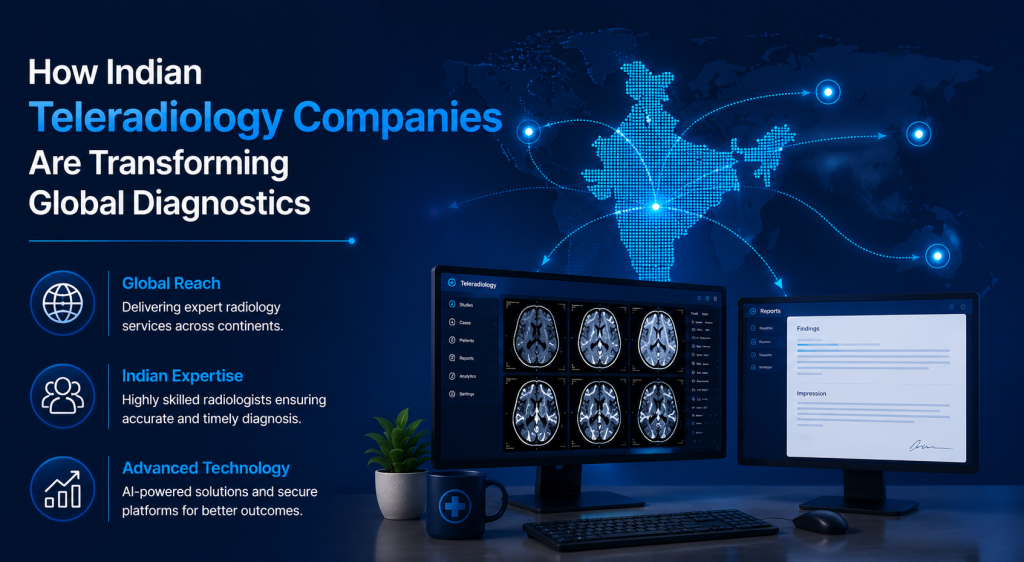
Healthcare systems around the world are facing a growing challenge—rising imaging volumes combined with a shortage of experienced radiologists. Hospitals are performing more CT scans, MRIs, X-rays, and ultrasounds than ever before, but many regions still struggle to provide timely reporting services. Delayed imaging reports can affect emergency care, diagnosis accuracy, and overall patient outcomes.
This challenge has created a strong demand for teleradiology services, allowing radiologists to review medical images remotely from different locations. Over the past decade, Indian teleradiology companies have emerged as major contributors to global healthcare by providing fast, cost-effective, and high-quality radiology reporting services to hospitals worldwide.
India has become an important hub for remote radiology due to its large pool of skilled radiologists, advanced technology adoption, and ability to provide 24/7 reporting support across time zones. Today, Indian teleradiology companies are helping healthcare providers improve diagnostic speed, expand specialist access, and manage increasing imaging workloads more efficiently.
This blog explores how Indian teleradiology companies are transforming global diagnostics and shaping the future of remote healthcare services.
The Growing Need for Global Teleradiology Services
Modern healthcare depends heavily on medical imaging for diagnosis and treatment planning. However, many countries face challenges such as:
- Shortage of radiologists
- Increasing imaging volumes
- Delayed reporting during emergencies
- Limited specialist availability in rural areas
- High operational costs for hospitals
Teleradiology helps solve these problems by enabling radiologists to interpret imaging studies remotely through secure digital platforms.
Hospitals can send scans electronically to specialists located anywhere in the world, ensuring faster reporting and continuous radiology coverage.
Why India Became a Global Teleradiology Hub
India has developed a strong position in the teleradiology industry because of several key advantages.
Large Pool of Skilled Radiologists
India produces a significant number of highly trained radiologists every year. Many professionals have expertise in sub-specialties such as:
- Neuroradiology
- Musculoskeletal imaging
- Cardiac imaging
- Oncology imaging
- Pediatric radiology
This allows Indian companies to provide specialized reporting support for complex cases worldwide.
Time Zone Advantage
One of the biggest strengths of Indian teleradiology companies is their ability to provide overnight reporting for hospitals in other countries.
For example:
- A nighttime emergency scan in the US or Europe can be reported during daytime working hours in India.
This “follow-the-sun” model helps hospitals maintain 24/7 radiology services without overburdening local staff.
Cost-Effective Reporting Solutions
Healthcare systems globally are under pressure to reduce operational costs while maintaining quality patient care.
Indian teleradiology providers offer cost-effective reporting services because of lower infrastructure and workforce costs compared to many Western countries.
Hospitals benefit from:
- Reduced staffing pressure
- Lower overnight reporting costs
- Flexible reporting support
- Improved workflow efficiency
This makes teleradiology a practical solution for healthcare providers managing large imaging volumes.
Improving Global Diagnostic Speed
Fast diagnosis is critical in healthcare, especially during emergencies such as stroke, trauma, and internal bleeding.
Indian teleradiology companies help hospitals improve turnaround times by providing round-the-clock reporting services. Radiologists can review and report studies quickly regardless of the hospital’s local time zone.
This improves:
- Emergency response times
- Critical care workflows
- Faster treatment decisions
- Patient management efficiency
Rapid reporting support is one of the main reasons global hospitals increasingly rely on Indian teleradiology services.
Expanding Access to Specialist Expertise
Many healthcare facilities, especially in rural or underserved regions, lack access to sub-specialty radiologists.
Indian teleradiology companies bridge this gap by connecting hospitals with experienced specialists remotely. Complex imaging studies can be reviewed by experts without requiring patient transfers or on-site consultations.
This is particularly valuable for:
- Cancer imaging
- Neurological cases
- Pediatric radiology
- Cardiac diagnostics
Global access to specialist expertise improves diagnostic quality and patient care.
Supporting Multi-Hospital Networks
Large healthcare networks often struggle to balance radiology workloads across different hospitals. Some facilities may experience staffing shortages while others face heavy imaging volumes.
Indian teleradiology companies help manage these challenges by providing centralized remote reporting support across multiple locations.
Benefits include:
- Balanced workload distribution
- Faster report turnaround
- Reduced radiologist burnout
- Continuous reporting coverage
This flexibility helps hospitals maintain operational efficiency even during peak demand periods.
Technology Driving Modern Teleradiology
Indian teleradiology providers are increasingly adopting advanced healthcare technologies to improve workflow efficiency and diagnostic accuracy.
Modern systems often include:
- Cloud PACS platforms
- AI-assisted workflow tools
- Secure image sharing systems
- Advanced reporting software
- Remote collaboration tools
These technologies help radiologists deliver high-quality reports efficiently while supporting global healthcare standards.
Maintaining Quality and Compliance
Global healthcare providers expect high standards in reporting quality, patient privacy, and regulatory compliance.
Leading Indian teleradiology companies focus heavily on:
- Quality assurance processes
- International reporting standards
- Data encryption and cybersecurity
- HIPAA and global compliance requirements
- Continuous radiologist training
Maintaining these standards is essential for building trust with international healthcare organizations.
The Role of AI in Future Teleradiology Services
Artificial intelligence is becoming an important part of modern teleradiology workflows. Many Indian providers are integrating AI tools to assist with:
- Case prioritization
- Automated abnormality detection
- Workflow management
- Reporting efficiency
AI supports radiologists by reducing repetitive tasks and helping identify urgent cases more quickly.
This combination of AI and remote reporting is expected to shape the future of global diagnostics.
Challenges and Opportunities Ahead
Although Indian teleradiology companies have achieved significant growth, the industry also faces challenges such as:
- Increasing global competition
- Cybersecurity concerns
- Regulatory complexity across countries
- Need for continuous technology upgrades
At the same time, opportunities continue expanding as healthcare systems worldwide adopt digital imaging and remote healthcare solutions.
Conclusion
Indian teleradiology companies are playing a major role in transforming global diagnostics by providing fast, reliable, and cost-effective remote radiology services. Their ability to deliver 24/7 reporting, support specialist consultations, and manage large imaging volumes has made them valuable partners for hospitals worldwide.
With strong technology adoption, skilled radiologists, and growing AI integration, India continues to strengthen its position as a global teleradiology leader. As healthcare systems increasingly depend on remote diagnostics and digital imaging workflows, Indian teleradiology companies will continue shaping the future of accessible and efficient global healthcare services.
FAQs
Indian teleradiology companies offer experienced radiologists, fast reporting, and cost-effective services. They follow international quality standards and provide reliable diagnostic support for hospitals across different countries.
Teleradiology enables radiologists to review emergency CT scans, MRIs, and X-rays remotely. Faster report turnaround helps doctors make timely treatment decisions during critical situations like stroke and trauma.
Modern teleradiology uses Cloud PACS, AI-assisted workflows, secure image transfer, and advanced reporting software. These technologies improve reporting speed, accuracy, and collaboration between healthcare teams.
Yes. Many Indian providers have radiologists specializing in neuroradiology, oncology, cardiac imaging, pediatric radiology, and musculoskeletal imaging, ensuring expert interpretation of complex diagnostic cases.
The future is driven by AI integration, cloud-based imaging, and expanding remote healthcare services. Indian teleradiology companies are expected to play an even larger role in improving global diagnostic accessibility and efficiency.